
Happy Italian-American Month!
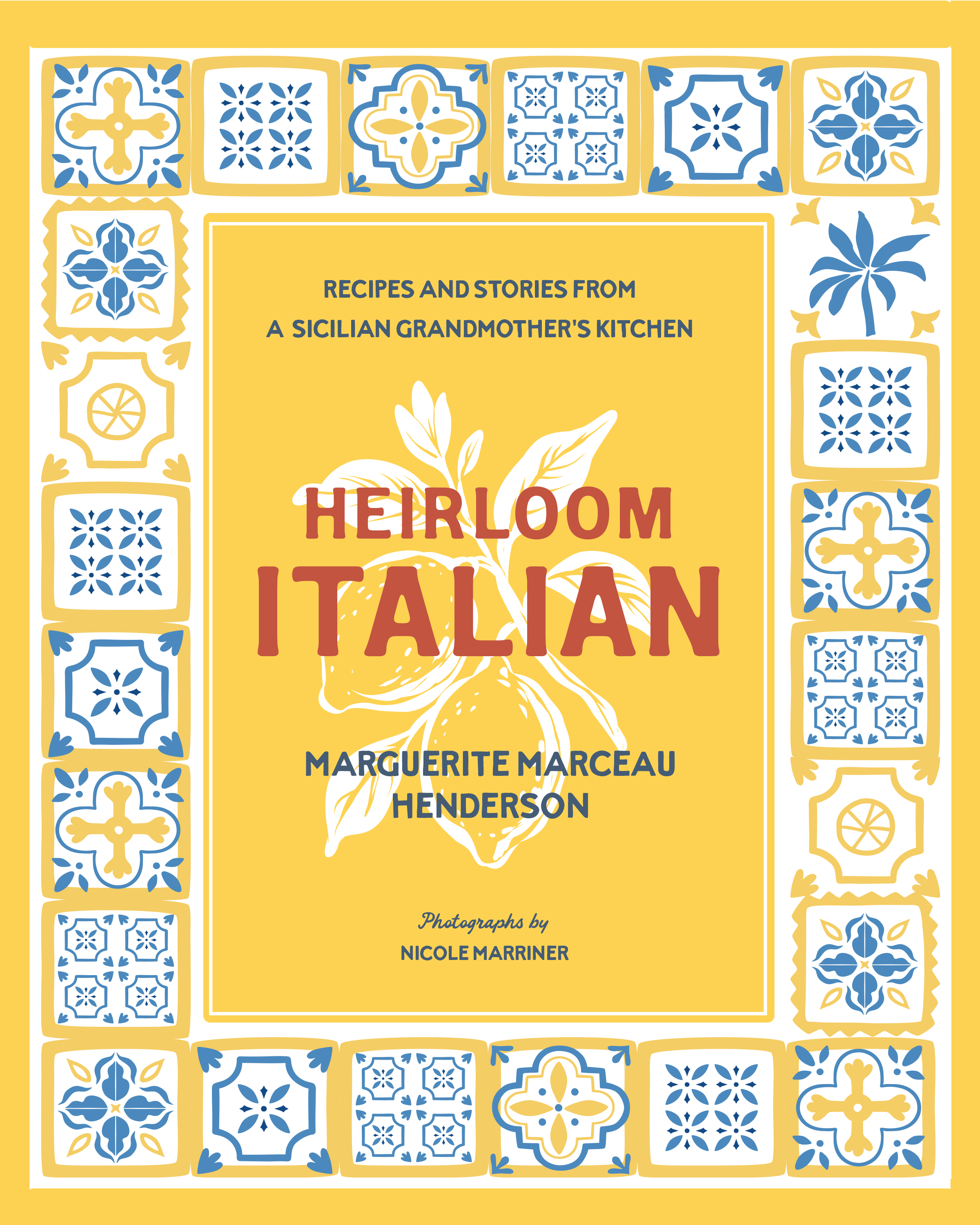
As we enter into the second week of Italian-American Month, it’s an appropriate moment to review the upcoming book by Marguerite Marceau Henderson: Heirloom Italian: Recipes and Stories from a Sicilian Grandmother’s Kitchen (Gibbs-Smith, October 27, 2026, with photos by Nicole Marriner). I must admit when I accepted the offer to review this book, I thought I would be looking at recipes coming directly from Sicily. That’s not the case — and it is completely fine, because Italian-American cuisine is its own wonderful tradition. I cannot imagine many of our major coastal cities without their Italian neighborhoods, mom and pop groceries, and traditional eateries.
As promised in the title, Heirloom Italian is peppered with the author’s family anecdotes. They are my favorite parts of each section and give the book heart. Each recipe also has a brief introduction, which is often where we learn it is a family heirloom. It is a delight to browse.
Among the recipes are the author’s mother’s and grandmother’s recipes: fresh figs wrapped in prosciutto with Cambozola cheese and roasted walnuts; Grandma Rose’s zesty lemon muffins; winter lentil, Swiss chard, and Italian sausage soup; classic Sunday supper sauce; braciole; pizza dough; and her profiteroles — and there was even one from Grandpa (her father) — his tomato-mint sauce.
It also offers a variety of traditional Sicilian recipes: caponata; arancini; Sicilian seafood salad; pasta con le sarde; pasta alla Norma; pesto alla Trapani and pesto di pistacchio; swordfish in agrodolce; and several desserts, including cassata and torta della nonna. But Henderson doesn’t limit her book to Sicily by any means. She incorporated many Italian regional dishes like the Roman bucatini al’Amatriciana and fettuccine alla carbonara; apple strudel from the northeastern part of Italy; and chicken cacciatore from the north (while there are variations in Sicily). And, of course, this cookbook would be remiss without some traditional Italian-American dishes, loosely based on Italian concepts but very much American: manicotti; pasta alla primavera; and tomato-vodka sauce.
Finally, she shares some of her favorite recipes from her restaurant Cucina (Salt Lake City), which closed in 2001, and others that are not Italian but are much loved by all, such as jambalaya, salmon cakes, and fried green tomatoes. In the end, it’s all about what your family eats, and — most important — what your family loves.
The book’s sections are titled in Sicilian dialect: Cullazioni (breakfast), Antipasto (appetizers), Suppa (soup), Insalata (salad), Pasta, Sugo (sauces), Entrées (mains), Verdure (vegetables), and Dulci (desserts), with a final section on Vacanza (holiday meals). The recipes are well written, and are carefully worded to help the home cook achieve success.
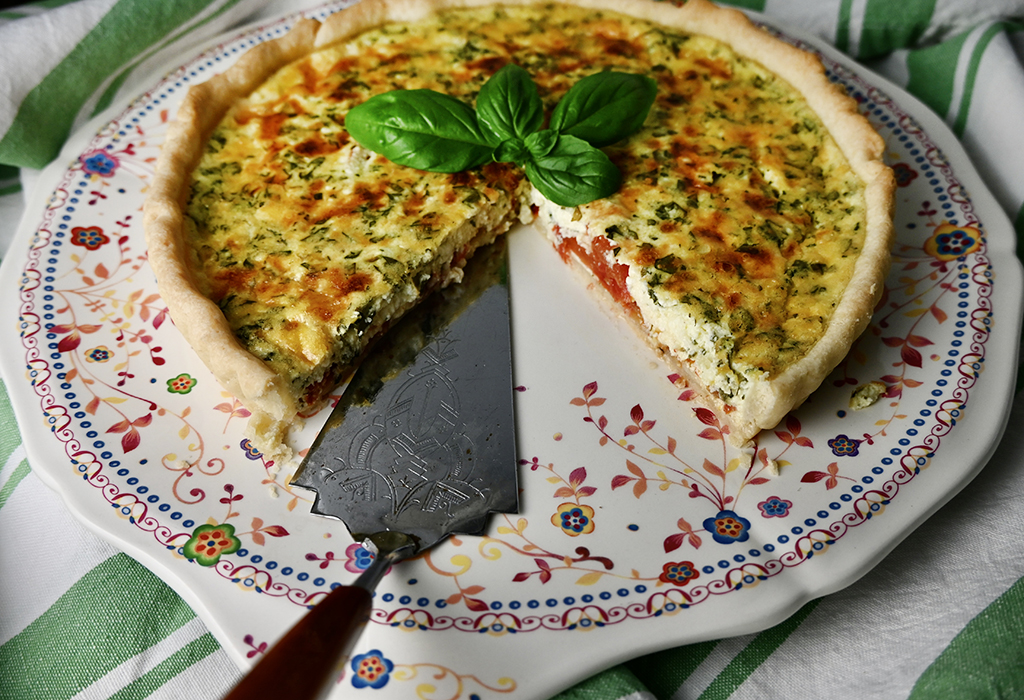
I chose three recipes to make — one from the Antipasto section and two from the Entrées. The Tart of Heirloom Tomatoes and Five Cheeses is among the antipasti. It is definitely more like quiche than pizza; it is very easy to make and is intended to be served as a first course, or a main course for brunch, or taken along on a picnic. The family loved a good picnic — a theme that recurs throughout the book. The recipe makes two tarts serving 12. I made two, but the recipe could easily be halved.
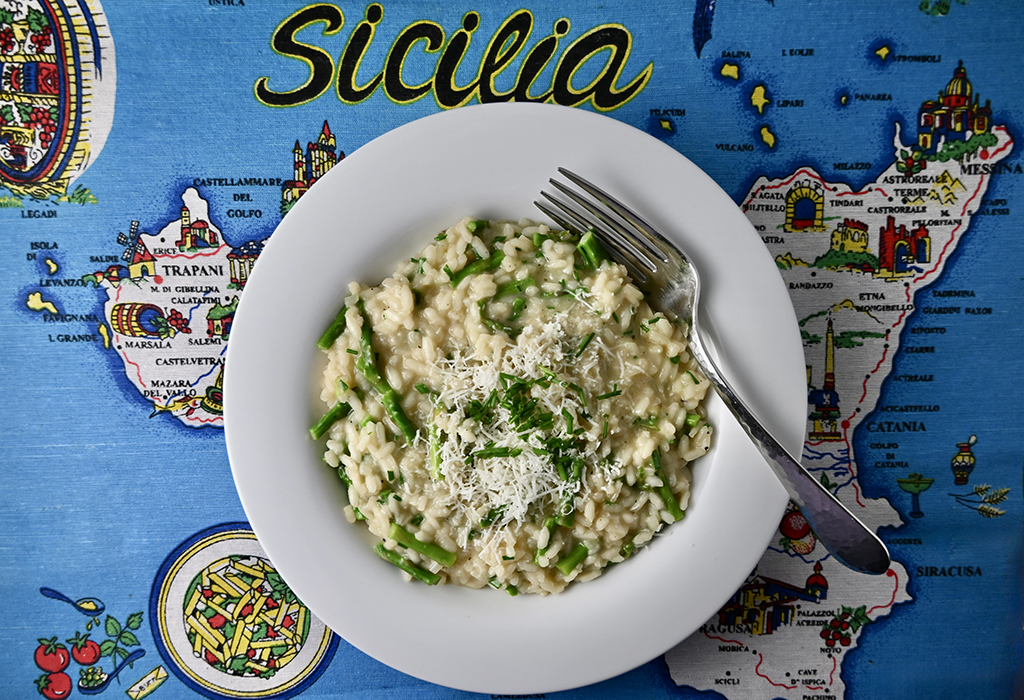
From the Entrées section I chose to make the Asparagus and Pecorino Romano Risotto. While risotto is traditionally a dish from the Po River Valley in the north, risotto is well-known in Sicily too, where it is used to make Arancini (though maybe not with asparagus). This recipe follows the traditional method of cooking the condimento (in this case, the asparagus) separately from the risotto, adding it at the end of the cooking with butter and cheese. Henderson also gives a nice tip from her restaurant days on how to make risotto in advance.
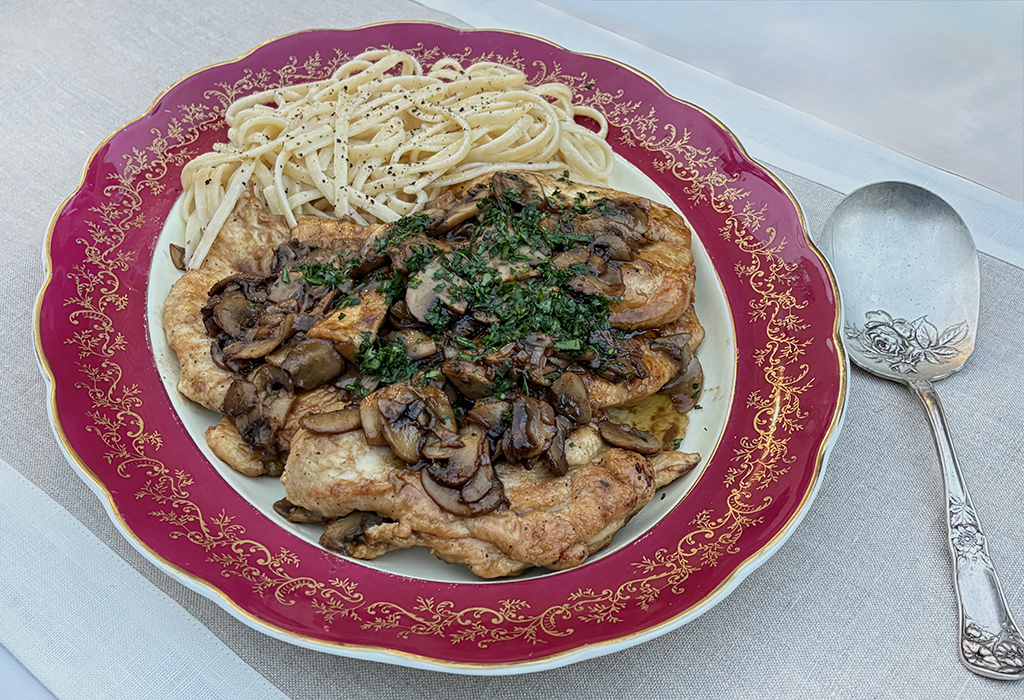
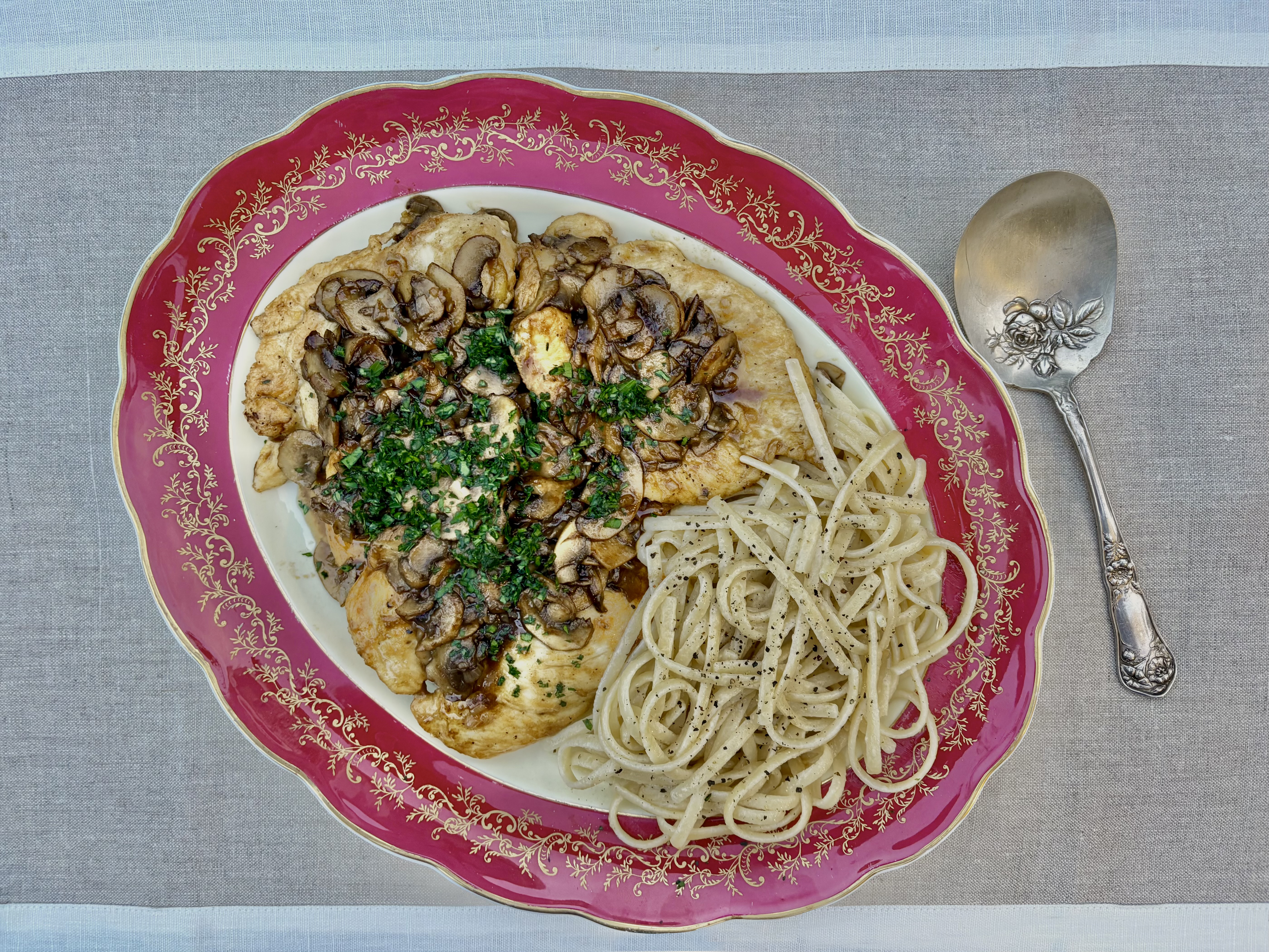
The second entrée I tested is a dish that never existed in Italy — either with chicken or veal scaloppine. It is a Sicilian-American dish that pays homage to the famous fortified wine of Sicily’s west coast: Marsala. Chicken Marsala was a favorite of mine as a young man who, at the time, hadn’t thought much about the difference between authentic Italian and authentic Italian-American cuisine. I knew what was good, and that was all that mattered. Make sure to use dry Marsala, as its sweet sibling will overwhelm the dish. I am sharing Henderson’s recipe with you today.
Marguerite Marceau Henderson is a distinguished culinary professional whose career spans over four decades as a cooking educator, caterer, restaurateur, food writer, and consultant. She is the author of four previous cookbooks. She resides in Salt Lake City, Utah.

~ David
Developed and maintained by Inspiratech LLC.
Design by Themeshift.
Susan Manfull
October 10, 2026 at 6:05 amWow! If this Chicken Marsala recipe is representative of this new cookbook, I want it!! Towny and I had the real pleasure of being with David and Mark when David prepared this exceptional dish! I cannot wait to have it again!
David Scott Allen
October 10, 2026 at 8:03 amThanks, Susan — it was a pleasure making it for you! If you get the book, I hope you enjoy it!
Frank | Memorie di Angelina
October 10, 2026 at 6:30 amSounds like a charming book. And the dish sounds very yummy!
David Scott Allen
October 10, 2026 at 8:04 amI’m always charmed by people’s kitchen memories — I think those people who think warmly of these memories become the best cooks!
Mad Dog
October 10, 2026 at 6:33 amAll three of your chosen recipes look delicious – I made a quiche last night to use up some of my cherry tomato glut – I stuck as many half tomatoes into the cream and eggs as could possibly fit!
There’s a long history of rice in Sicily, the Moors were growing it there at the same time as they were in Spain. Later, when the Kingdoms of Sicily and Naples were part of the Aragonese Empire, the Sicilians were being sold rice from Spain. There’s also a rice dish from Apulia and Calabria called a Tiella with a distinct historical connection to Spain.
That’s a fabulous Chicken Marsala – I bet it’s amazing with veal too! Marguerite Marceau Henderson’s book looks excellent.
B.T.W. is that a silver plated jam spoon on the side? I have a couple myself, decorated with flowers and berries.
David Scott Allen
October 10, 2026 at 8:09 amWonderful information on the rice, Mad Dog — I should send my posts to you for historical additions before I hit publish!
Your tomato quiche sounds fantastic, especially with homegrown tomatoes. They do make a difference. I made the tart with grown-in-the-ground farmers market tomatoes and it was delicious.
The Marsala would be good with veal. Hard to get anymore but I am looking for sources of rose veal in the US. We had some in France and it was delicious. As for the spoon — it is quite large so probably a serving spoon, thought I imagine there is a matching jam spoon.
Barb
October 10, 2026 at 6:53 amThe book sounds delightful, and all three of the recipes you chose to make look delicious! I’ve always liked both chicken and veal Marsala. Marguerite’s recipe is simple and since it only requires ingredients I almost always have on hand it would be great for days when I don’t have much time to prepare dinner. I definitely will make it soon. The tart is very intriguing. What wines did you serve with these recipes?
David Scott Allen
October 10, 2026 at 8:14 amThanks, Barb — the cookbook is filled with great recipes, and I will be continuing to make more over time! As I said to Mad Dog, veal is hard to come by. So many of our grocery stores in Arizona are owned by companies in California, where veal is not allowed. But I love veal Marsala, too. That said, chicken makes a very nice and reasonably priced substitute.
As for wines with the other dishes: I served a Vermentino with the risotto (it worked well with the asparagus) and — of I remember correctly — an Aglianico with the tart. Sadly, I had no Sicilian wines in the house though I probably would have used a Nero d’Avola.
Carolyne
October 10, 2026 at 8:54 amIt looks like a cookbook that you could eat!
David Scott Allen
October 10, 2026 at 9:41 amAbsolutely! So many good recipes!
Jill W Becker
October 10, 2026 at 9:46 amMy favorite kind of cookbook – stories and recipes. Must try the chicken.
angiesrecipes
October 10, 2026 at 10:25 amChicken Marsala looks absolutely mouthwatering! And I love your that platter for quiche.