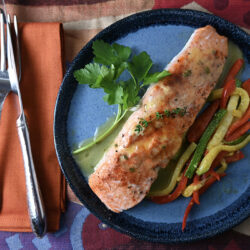
Roasted Salmon, Meyer Lemon-Thyme Beurre Blanc
Ingredients
- 2 tablespoons kosher salt I use Morton’s, plus extra
- 4 8- ounce portions wild king salmon
- 1/4 cup white wine
- 1/2 cup strained Meyer lemon juice
- 1 shallot peeled and quartered lengthwise, root end intact
- 6 tablespoons plus 4 teaspoons cold unsalted butter divided
- 1 tablespoon fresh thyme leaves plus sprigs for garnish
- freshly ground black pepper
- sweet paprika
Instructions
- Stir together 2 tablespoons of the salt and 4 cups water in an 8-inch square baking dish until the salt has dissolved. Remove the skin from the salmon, and add the portions skinned side up. Let sit at room temperature for 15 minutes while you prepare the beurre blanc.
- Place wine, lemon juice, and shallot quarters in a small sauce pan. Season with salt. Bring to a boil, reduce heat, and simmer briskly for approximately 7-8 minutes, or until liquid has reduced to about 2 tablespoons; it will look syrupy. Scoop out and discard the shallot quarters. Set the reduction aside.
- Heat the oven to 275°F.
- Drain and pat the salmon dry. Line a baking sheet with parchment, then add the salmon skinned side down. Place two 1/2 teaspoon slices of butter on each portion. Season with black pepper and a sprinkling of paprika.
- Roast for 18 minutes in the upper third of the oven, then turn on the broiler for a minute or two to give it some color.
- Towards the end of the roasting time, reheat the wine-Meyer lemon reduction over medium and, when gently bubbling, add the 6 tablespoons cold butter, one at a time, whisking constantly to emulsify the sauce. After the final tablespoon of butter has been added and emulsified, toss in the thyme leaves and stir.
- Place the salmon fillets on four separate plates with vegetables and spoon the beurre blanc over the salmon. Garnish with a thyme sprig, if desired.
Notes
Serves 4.
In this version, I remove the salmon skin before brining and cooking. While leaving the skin on has benefits, slow-roasting with the skin-on produces a visually unappealing plate, and the skin is very difficult to remove once cooked.