
Moon Croissant, Paris
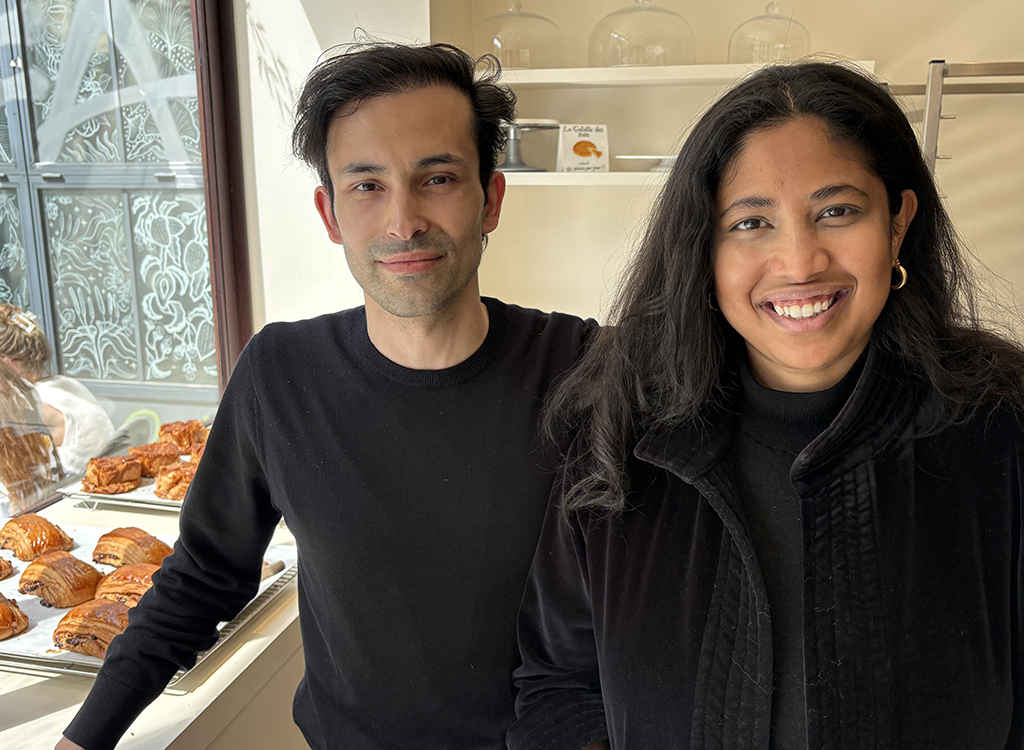
Ama Athige Silva is a tourier — in classic French baking, this is a specialist who focuses exclusively on laminated doughs, specifically croissants. Ama makes the best croissants in Paris, and I’m not exaggerating. It was my good fortune that her shop, Moon Croissant, was just a few minutes’ walk from our Parisian apartment, which meant the freshest and best croissants every morning to go with Mark’s and my cocoa.
Her husband, Hermann, runs the front of house. When I would pop in, he would greet me warmly, ask about the marvels we had seen the day before, and then help me choose what delicious treats I would be taking back to the apartment for everyone to enjoy.
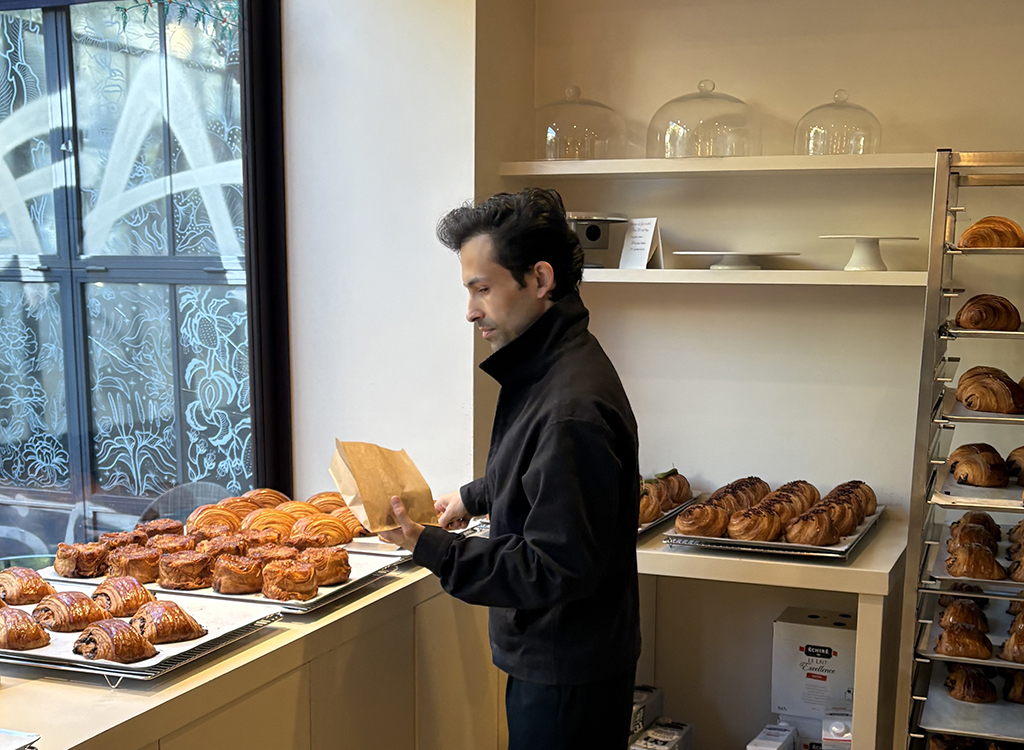
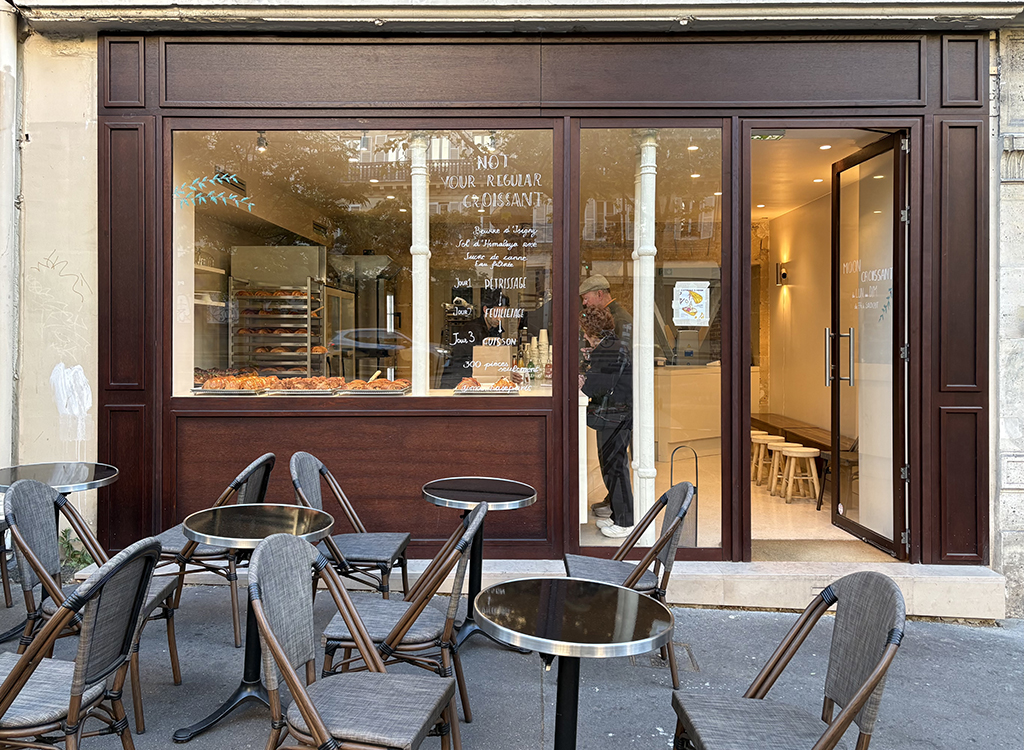
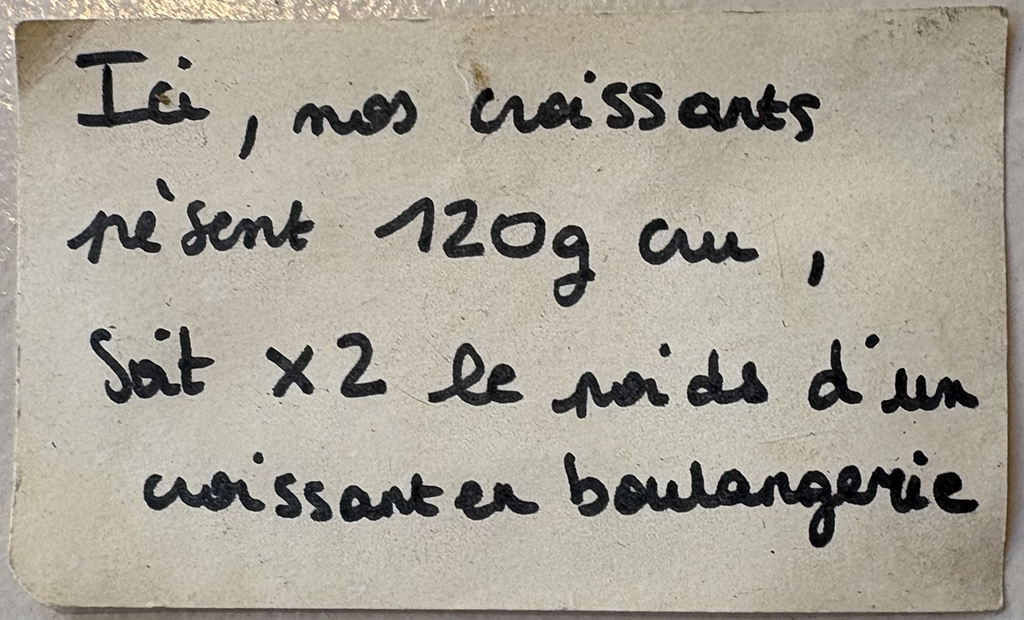
One morning, I noticed a sign taped to the counter that says, «Ici, nos croissants pèsent 120g cru. Soit x2 le poids d’un croissant d’un boulangerie.» (Here our croissants weigh 120g raw. That’s twice the weight of a bakery croissant.) That’s the moment I realized this wasn’t your ordinary croissant shop; they were doing things differently here. In fact, on their shop window, they proudly aver, “Not Your Regular Croissant.”
Through Herman’s help, I arranged to meet Ama at the shop. We chatted for half an hour, and shared our passions for food and the importance of quality ingredients. I then asked if, for Cocoa & Lavender, I could interview her about Moon Croissant (by email, as I was leaving Paris the next day). The interview is below and I am grateful to her and Hermann for their time and generosity.
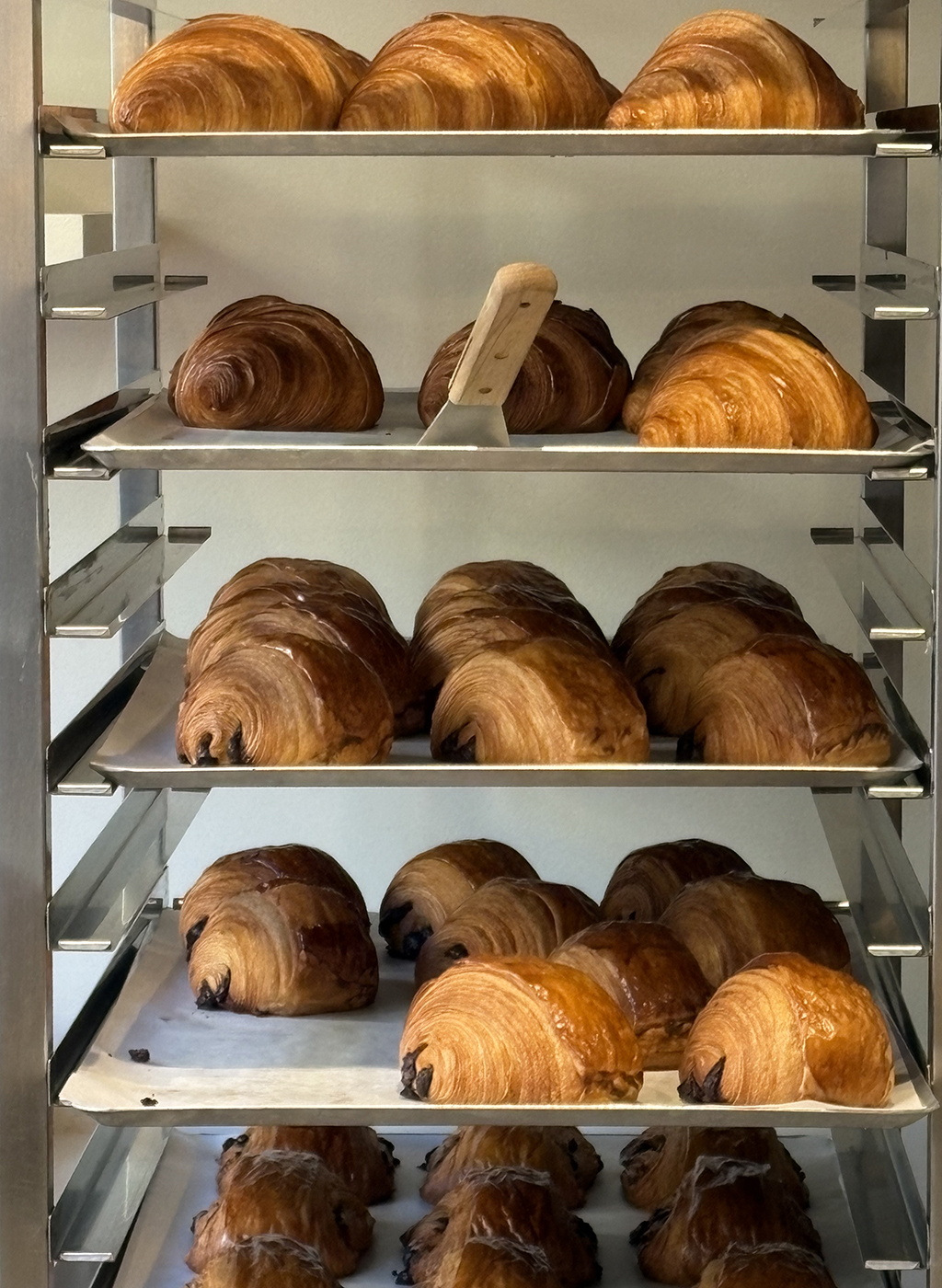
Needless to say, when you get to Paris, make sure you stop in early in the morning to get the best croissant in Paris. After all, they make only 300 a day.
___________________________
Please tell me about the name “Moon Croissant” — how did the name come about? Moon is an English word, and therefore international, easy to remember. It connects to things we love – we have a passion for space, for celestial bodies, it’s fascinating. The name also comes from a superstition, or rather a whim: we wanted a name with double “oo” that feels infinite, as in Google or Facebook. There’s a feminine side to it. And, our location is 88 (double infinity). Finally, of course, a croissant is shaped like a crescent moon.
What brought you and Hermann to Paris? I was born in Sri Lanka. Hermann was born in France. We are both Parisians and citizens of the world. We met in London and stayed in touch on social media – Hermann followed my newsletter (food, lifestyle, etc…). We decided to go on a journey together, and Paris was the obvious choice.
When did Moon Croissant open? For a few years, we had the idea of building a place that brings people together around coffee and an iconic product. We thought about launching in 2020, but COVID put a brake on it. After leaving the tech world, we said to ourselves: now or never. We founded the company in 2023. We opened our first spot – the “Minimum Viable Shop” – a 25 m² space in 2024. And in 2026, we are launching our new boutique, right next door, on the ground floor of the same building.
What are your plans for expansion? Our aspiration is to be the local hero of choice, a home to customers who make decisions with craft and quality in mind. We want to create a local and global ecosystem around the croissant, with the ambition to become a reference in Europe, to revalue a savoir-faire and bring our own touch, our own creativity to the market. To do that, we rely on team cohesion and a start‑up mindset where agility comes first. From the beginning, many people have wanted to join our journey, so it felt natural to invite our customers and LinkedIn followers to invest.
Please share your passion for food. How did this morph into making croissants? Food brings people together – it’s a way to show affection. For my father, it was his way of connecting with us. He came from Sri Lanka and worked as a private chef. For him, it wasn’t just a job – it was his way of being. By his side, I learned how to combine ingredients, to feel, to understand that you can make great things with simple ingredients. I used to bake croissants with him during the week-end, at home.
For a long time, I ran away from this world because I didn’t feel free. But over time, and with the rise of other women in this field, I realised it was the right moment. That desire grew into an obsession, and I had to make it happen. The croissant is Viennese, French, and now cosmopolitan – just like its founders.
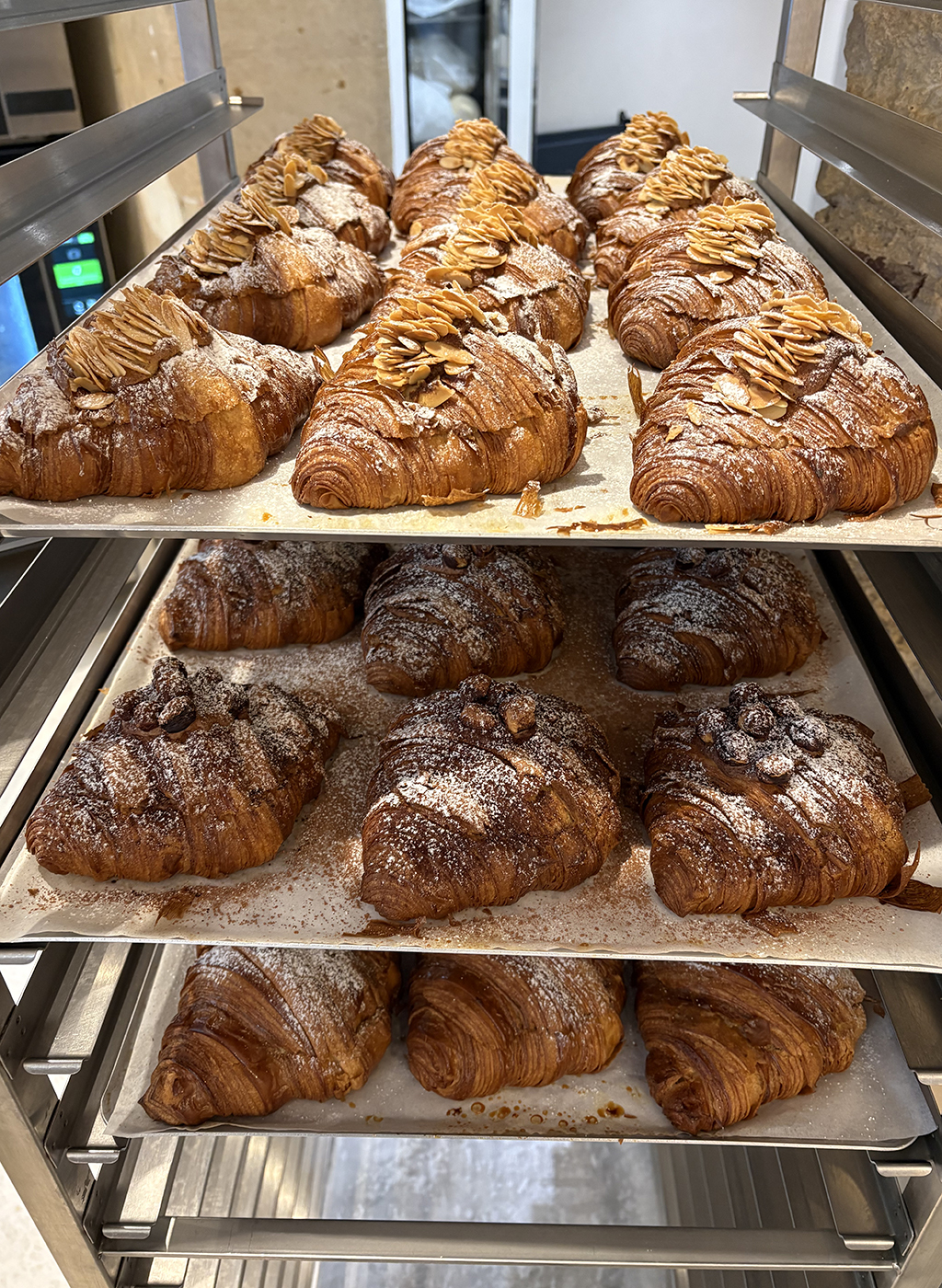
What are the guiding principles you have for Moon Croissant? We take croissants seriously. Too long overlooked, we want to change the narrative. We want to show to the French that a croissant is harder to make than a molten chocolate cake, a carrot cake, a banana bread, or a cookie – products that are often more expensive and more valued in the market. More than 80% of croissants sold in bakeries are industrial due to the business model. We see high‑quality products emerging in Copenhagen, in Anglo‑Saxon countries, and in Asia – we want the same in Paris. Our principles: transparency, sourcing from the best producers in the world, pride in the skill that goes into sourcing, production, and presentation. Customer service is key – we welcome people, explain our products, ask how they found us. It’s never just about the croissant; it’s about how people feel. We hire for warmth, curiosity, and emotional intelligence. No superiority complex.
Tell me about the ingredients you use. Our menu focuses on variations of croissant dough. We source globally: pistachios from Iran, hazelnuts from Piemonte, black sesame from Japan. We are committed to quality and traceability. [Note — the main ingredients they use are listed on the window: Beurre d’Isigny, sel d’Himalaya rose, sucre de canne.]
How long does it take to make a croissant? It takes three days from raw ingredients to a croissant served to a customer. Our plain butter croissant weighs 120 g raw – roughly twice the weight of a typical bakery croissant (60‑70 g). Every day, we put our trust on the line. Changes in climate, humidity, and temperature can affect production. We produce everything in‑house. [Note — the timeline is also written on the shop window.]
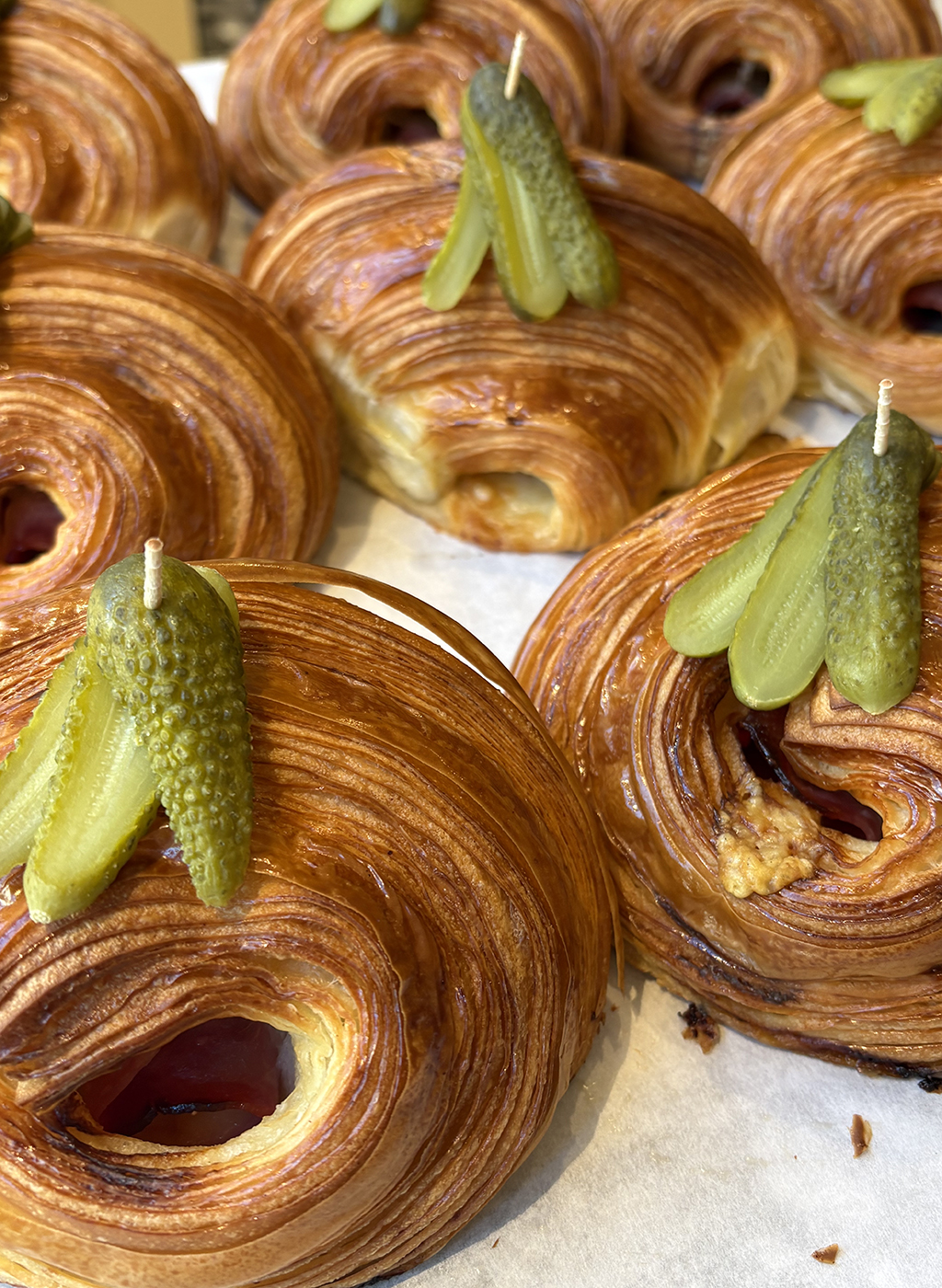
From memory of my visits to your shop, you offer croissant beurre, kouign amann, pain au chocolat, pain Suisse — what others do you offer? Do you have ideas for new creations? You have a good memory! We also have laminated brioche (cinnamon, sugar), savoury versions (ham & Comté, sumac & pink peppercorns, cheesedog, parsley roll), and twice‑baked croissants made from fresh croissants (almond, pistachio, hazelnut, black sesame, yuzu). We also explore limited‑edition specials – seasonal things. The idea is always to surprise without ever compromising quality.
Tell me about your team – in addition to you and Hermann. Our team is still small but incredibly passionate. We have three senior people in pastry who I teach and coach to becoming true masters of lamination, and three front‑of‑house people who are real ambassadors of the house. Everyone is involved in everything, and we share the same values: curiosity, generosity, excellence. We also have that start‑up cohesion – no ego, just the collective drive to make Moon Croissant better every day.
As I will be posting this in June, what are your summer hours? Will you be closed for the month of August? Right now we work 7 days a week, counting no hours – but very soon we will finally take a little time off. We will not close for the whole of August, but we will take a two‑week break at the end of August so the team can rest. Summer hours will be posted on our social media. [Find them on Instagram and LinkedIn.]
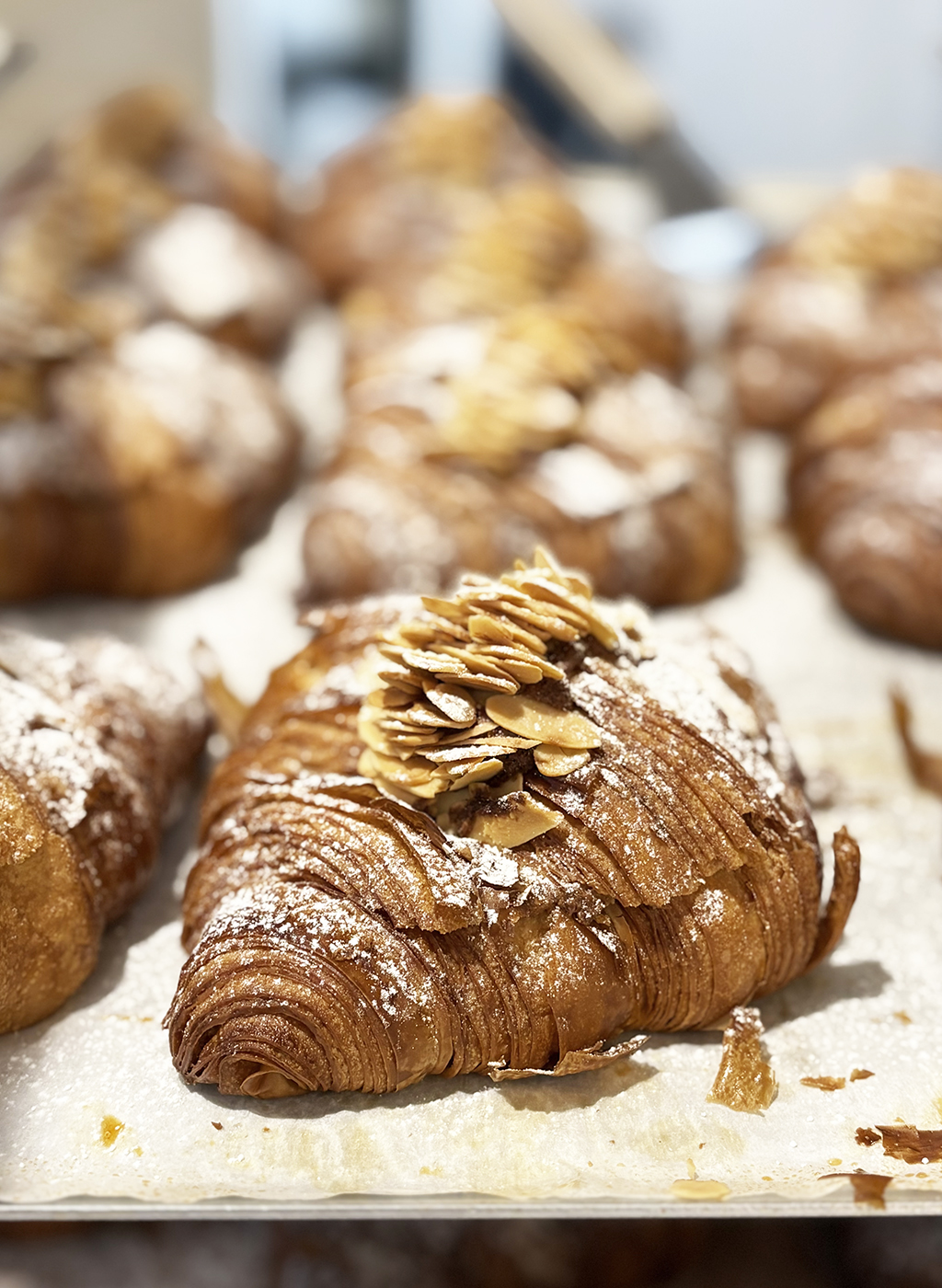
Is there anything else you would like to tell me that I haven’t asked? Yes. Unlike many hospitality brands that start with branding and retrofit a story later, at Moon we started with a single product: the plain croissant. We beta‑tested and pre‑sold it on LinkedIn to the people who followed our journey. Every product has been tested on a customer panel, taste‑approved, and then pre‑sold. Even limited products like flan or galette. That comes from our tech background. And 25 m² on Paris’s famous Boulevard Beaumarchais was all it took to conceive Moon Croissant and lay the foundations of everything to come.
___________________________
Moon Croissant • 88 Boulevard Beaumarchais • 75011 Paris
Open daily, 7:00am until sold out • In Paris you can order for pick up: click here
___________________________
Ama has very generously shared her pistachio croissant recipe with me, so that I could share it with you. You will need to start with 15 fresh, all-butter croissants (they make their own, of course, but for most of us it is more practical to buy the freshest croissants we can get). From there, you can create her Croissants à la Pistache.
~ David
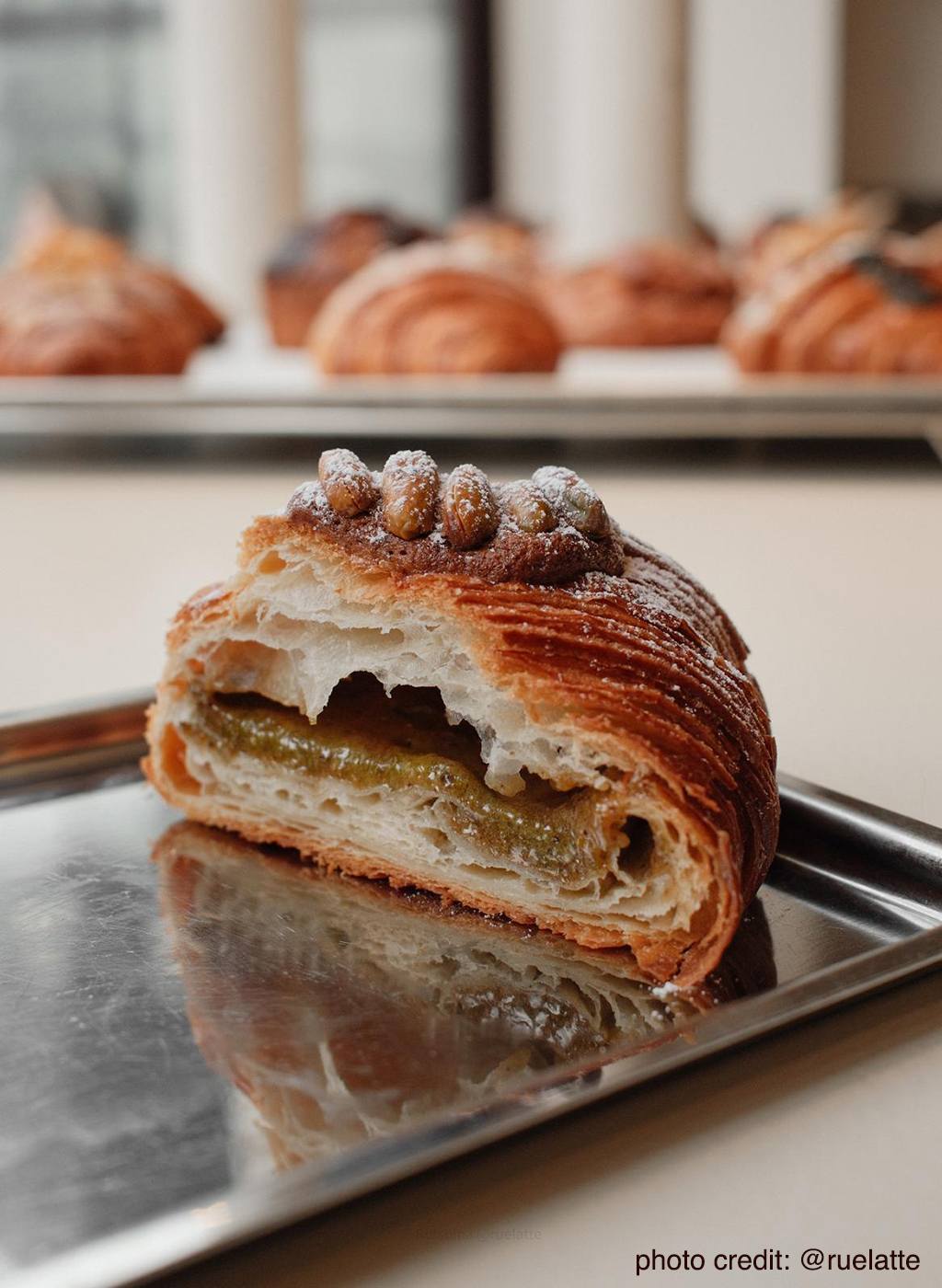
With thanks to @ruelatte for the photo of the Croissant à la Pistache

Developed and maintained by Inspiratech LLC.
Design by Themeshift.


Eha Carr
June 13, 2026 at 5:00 amWhen I just clicked on, late on an Australian winter night, I surely did not expect to be reading this. The particular croissant recipe and the directions to get such and others, should one be lucky to get to Paris, are naturally hugely welcome . . . your talk with a very special baker – a dialogue I was/am privileged to share. Thank you.
David Scott Allen
June 14, 2026 at 10:05 amThank you, Eha — and special thanks for sharing this with your readers. It was a real treat for us to have them so close by; I think we will make sure that our rentals are nearby in the future!
Mad Dog
June 13, 2026 at 6:08 amThose are superior croissants and that’s a great recipe for the pistachio cream! That looks like a fabulous boulangerie. As you mentioned, most commercial croissants are pre-made and even Parisians buy them in plastic packets from the supermarket!
Did you know that you can knock on the door of a baker’s shop (in France and Spain) at 5 or 6 in the morning to buy croissants straight from the oven and if you want a pain au chocolate, they’ll inject it with warm chocolate. And in Spain, croissants are made with lard.
David Scott Allen
June 14, 2026 at 10:04 amI did not know that about croissants in Spain. I don’t think I ever had one while I was there. These croissants are seriously good, and I can’t wait to try the pistachio ones again.
Mimi Rippee
June 13, 2026 at 7:06 amOh la la la. I so wanted to go to Moon but didn’t make it. They certainly look hefty! A great interview – good for them! And merci for this recipe. I have gotten good croissants from Williams-Sonoma.
David Scott Allen
June 14, 2026 at 10:03 amThe W–S croissants are really pretty good. Small, but good. Maybe I’ll get back to Paris and you can visit them!
Barb
June 13, 2026 at 7:33 amWhat a fascinating post!! The interview with Ama was incredible! How generous of her to share the Croissant à la Pistache recipe. No doubt you thoroughly enjoyed making them. Thank you, Ama and Hermann, for allowing David to share this wonderful recipe with his readers!
David Scott Allen
June 14, 2026 at 10:02 amIt is truly a wonderful recipe, and they are a lovely young couple. I look forward to seeing them again soon.
Gerlinde de Broekert
June 13, 2026 at 8:37 amWhat a wonderful interview, David. It put me right back into Paris. I love the photos and the recipe you did such a wonderful job putting it all together.
David Scott Allen
June 14, 2026 at 10:02 amThank you so much, Gerlinde. I really enjoyed meeting them and having a chance to chat with them about their plans. And, I look forward to seeing them again in December.
Karen (Back Road Journal)
June 13, 2026 at 10:09 amHow lovely that Ama shared her delicious Croissant à la Pistache recipe. Her croissants must be fabulous.
David Scott Allen
June 14, 2026 at 10:01 amThey are definitely the best croissants I’ve ever had in my life. And, not to brag, but I’ve had a lot of croissants.
Jill W Becker
June 13, 2026 at 11:07 amWhat a delightful post. Loved that you interviewed this couple. Looking at the photos I swear I could smell/taste the croissants. Thank you for once again taking us along with you and Mark on your adventures.
David Scott Allen
June 14, 2026 at 10:00 amThanks for coming along, Jill. It’s really fun to write these posts as they bring back so many wonderful memories.
Carolyn Niethammer
June 13, 2026 at 2:03 pmWe have a new bakery here in West University in Tucson that makes great baked goods. They have a large window into their kitchen and I was fascinated to watch a young woman begin the laminating process. She took huge blocks of butter to use.
David Scott Allen
June 14, 2026 at 10:00 amI haven’t heard about this new bakery, Carolyn. I’ll have to check them out. The laminating process is fascinating, but frightening how much butter they use! (Not that I’m afraid of butter…)
Fran @ G'day Souffle'
June 13, 2026 at 2:19 pmWoohoo! I’m going to Paris soon for 5 weeks and will definitely have to top by this store. They’re located on the right bank. I’ve made croissants many times and was hoping to see their dough recipe (ha ha, that wasn’t going to happen), but am thankful at least to see their pistachio recipe.
David Scott Allen
June 14, 2026 at 9:59 amOh, I don’t think they would share their dough recipe, Fran! Some things do need to be kept secret. But this is a great way to make pistachio croissants, and I think you’ll enjoy meeting them when you get to Paris. When are you going?
Fran @ G'day Souffle'
June 14, 2026 at 8:11 pmWe’re going at end of August. Actually, the dough recipe for croissants is pretty standard: flour, milk, yeast, bit of salt and some melted butter, but it’s the skill in laminating and putting it all together that counts. Professional bakers are fortunate to be able to use ‘sheeters’ that allow the dough to be rolled out thinly. I’ll let you know how my visit goes with them!
David Scott Allen
June 15, 2026 at 8:08 amI’ve never heard of melted butter used for croissants — very interesting. When you go, check Moon Croissant’s hours on their social media — they might take a brief vacation in August.
Sherry M
June 13, 2026 at 5:06 pmOh David, you will think I am such a heathen but i don’t like croissants!! I just do not appreciate them I’m sorry to say. But I do like pistachios so the addition of the paste and nuts to these makes it sound much better 🙂 Lucky you tho to have been in Paris and near to a bakery!
sherry
David Scott Allen
June 14, 2026 at 9:58 amIt was really fortunate that we were so close, and will be again when we are there in December. I don’t think you’re a heathen Sherry but, for a food blogger, you certainly have a lot of dislikes!
Sherry M
June 17, 2026 at 12:42 amIt’s not so much dislikes but that i am ethically opposed to eating lamb, pork and certain unsustainable seafoods etc. But yes tomatoes and pasta – as you know – hehehe …
sherry
Fran @ G'day Souffle'
June 14, 2026 at 8:14 pmI understand (sort of) why you don’t like croissants. They can be a bit plain by themselves. But when you add a bit of strawberry jam to them or develop them into ‘pain au chocolat’, they’re wonderful!
FEL!X
June 13, 2026 at 6:35 pmFascinating! Poahh: 300 croissants a day! I know how much work it is to bake croissants at home …
David Scott Allen
June 14, 2026 at 9:57 amYes, it is a huge amount of work. But they are up to it and, boy, do they do a great job.
angiesrecipes
June 13, 2026 at 9:28 pmo my my…looking at all those gorgeous pastries- HEAVENLY!! I feel as if my waist spread a little bit 🙂
David Scott Allen
June 14, 2026 at 9:57 amWell, I know mine didn’t get any smaller! 🤣
Melody Jacob
June 14, 2026 at 2:56 pmImagine having the absolute best croissants in Paris just a few minutes’ walk from your apartment, that is the ultimate holiday jackpot! I love the story behind the name Moon Croissant, especially the detail about wanting the double “oo” for infinity, and the fact that they literally weigh twice as much as a standard bakery croissant is incredible. Ama’s journey from the tech world and baking with her father to becoming a master tourier is so inspiring, and Hermann sounds like the absolute perfect front-of-house host. You can really feel their passion for quality and craft in this interview, and I am definitely bookmarking their shop for my next trip to Paris.
David Scott Allen
June 17, 2026 at 11:52 amThanks, Melody — and welcome to Cocoa & Lavender! Yes, definitely find your way over to visit Ama and Hermann when you are next in Paris!
Inger
June 14, 2026 at 4:51 pmYou may be tipping the scales on us heading back to France sooner…
David Scott Allen
June 15, 2026 at 9:13 pmAnd how is this a bad thing?
Jeff the Chef
June 15, 2026 at 6:10 pmHow fabulous! I’m so envious of your travels and so in awe of your culinary talents and professionalism.
David Scott Allen
June 15, 2026 at 9:14 pmThanks, Jeff — travel is my passion!
Ben | Havocinthekitchen
June 17, 2026 at 11:03 amThese croissants look absolutely irresistible, David! Pistachio is one of my favourite flavours, and that filling looks so rich and elegant.
David Scott Allen
June 20, 2026 at 6:45 amThese are truly amazing croissants, Ben.
Raymund
June 18, 2026 at 4:41 pmThis Moon Croissant piece is such a delight, you can feel how special the place is just from the way you describe Ama and Hermann and their whole “not your regular croissant” philosophy.
David Scott Allen
June 20, 2026 at 6:41 amThanks, Raymund. They are really special young couple.
Valentina
June 25, 2026 at 8:34 pmI would need to be pinched if I was having a hot chocolate and a perfect croissant baked by a tourier in France. (Twice the size of a typical one, no less!) ALL of these pastries are spectacular! Seriously stunning. 🙂 ~Valentina
David Scott Allen
June 26, 2026 at 9:07 amI can’t wait to go back in December!
2pots2cook
July 9, 2026 at 2:17 amThank you David! The best post ever!
David Scott Allen
July 10, 2026 at 9:01 amWho doesn’t love pistachios and pistachio cream?
CC
July 10, 2026 at 1:58 pmI just love this! Good for them, choosing to do it “right!” I’m going to visit next time I’m in Paris and I’ll tell them you sent me! Thanks, David!
David Scott Allen
July 11, 2026 at 1:58 pmDefinitely should visit their shop, Christina! They’re such a nice couple (all the stuff is very nice) and the croissants are out of this world!
Marcelle
July 14, 2026 at 6:54 amDavid, this recipe is amazing, thank you for sharing it. I’m honestly am so excited to try it, and I definitely will! What a fantastic interview, such an innovative business plan and I could sense a great passion in her answers. I would imagine you have to have your whole heart into it to open a bakery in Paris 🙂 Funny fact, I’ve been to Paris 5 times in my life, but never went out into the city lol I used fly Air France back when I traveled alot and lived in Stockholm. Charles de Gualle was always our first stop and we would connect with the next flight out to another destination from there, I never got to see any part of the city other than that. One day I’ll be back that way and hopefully I’ll get to visit Moon Croissants 🙂