
In our continuing European trip, we left Morette in France, and traveled by train to Zürich (with changes in Lyon and Geneva). The trip was easy and perfectly on time; I love the Swiss train system, and it is convenient that I have a toddler’s command of the three languages for signage and announcements.
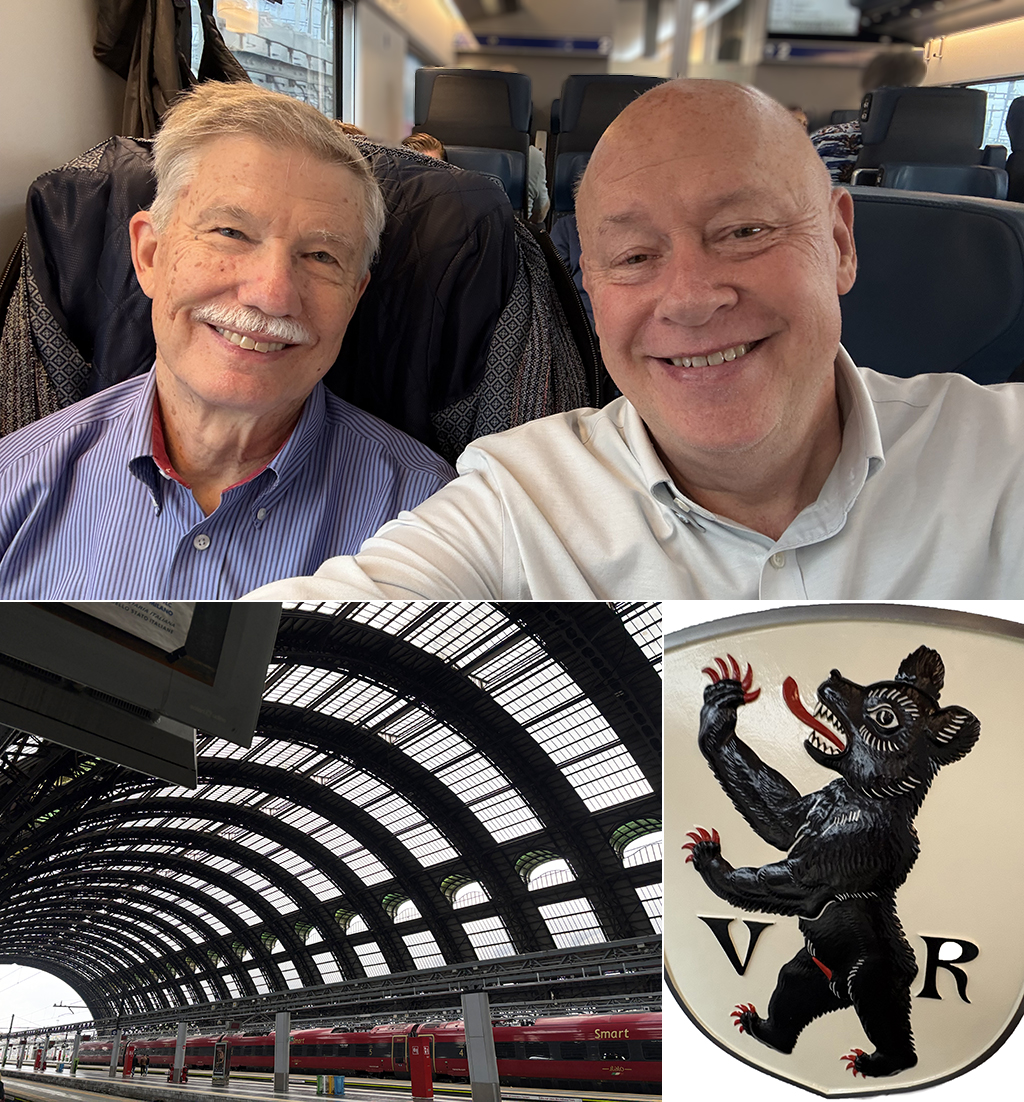
We were the guests of our good friends Pauline and Alex. Pauline is an alumna of the University of Arizona W.A. Franke Honors College (where we met) and Alex, whom she met in Zürich, though he is from the French-speaking part of Switzerland. Because they both work (a concept we have easily forgotten in retirement), they took turns showing us the wonders of the region.
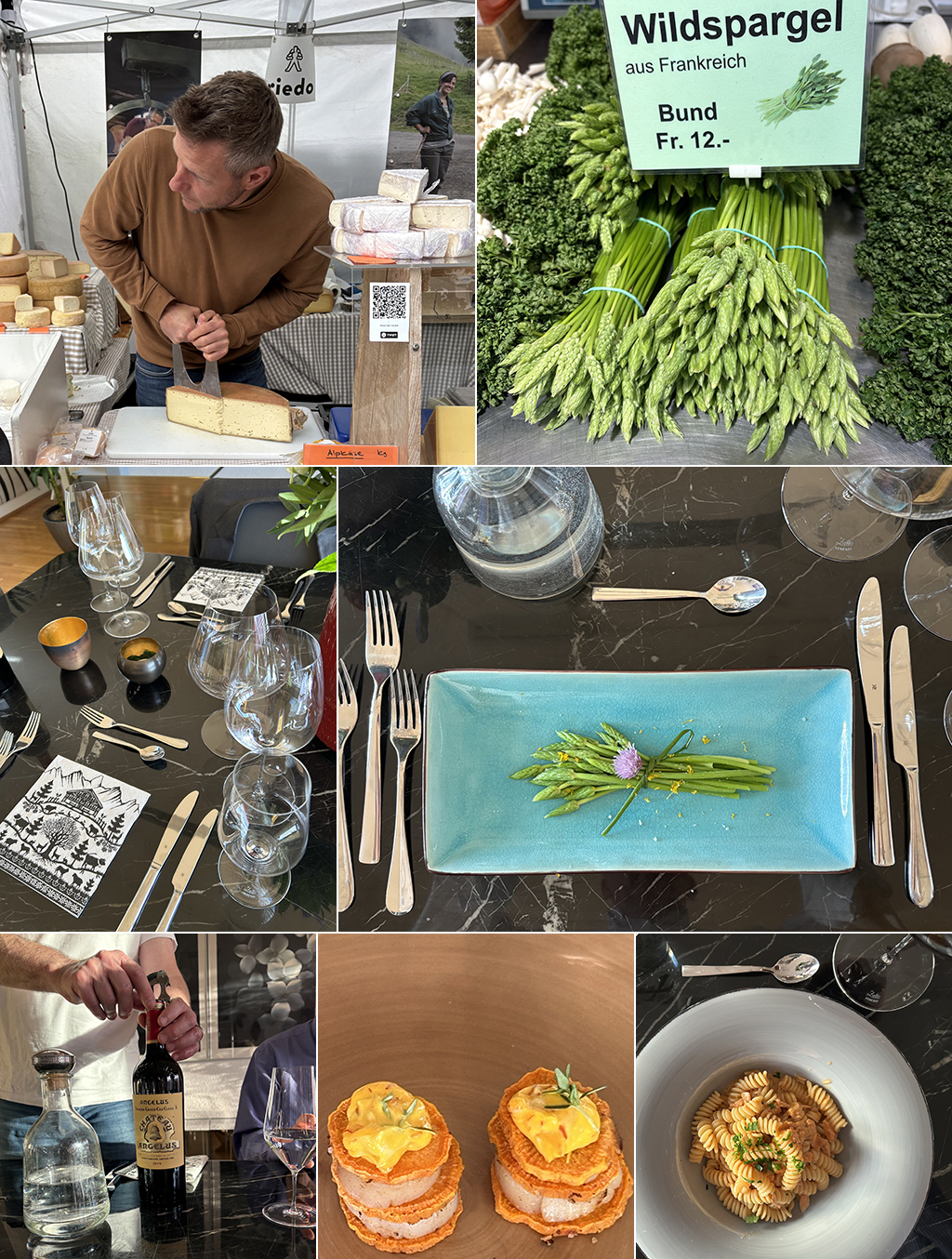
Our first order of business was to visit the bi-weekly Market Oerlikon — a few minutes’ walk from Pauline and Alex’s house. My photos are few because, well, I was concentrating on what to make for dinner! One night I made a salad with wild asparagus, sweet potato and scallop napoleons with saffron mayonnaise, and a creamy pasta with smoked salmon, chipotle, and scotch. On another evening, Pauline made an incredible Swiss fondue using cheeses Alex picked out from the market.
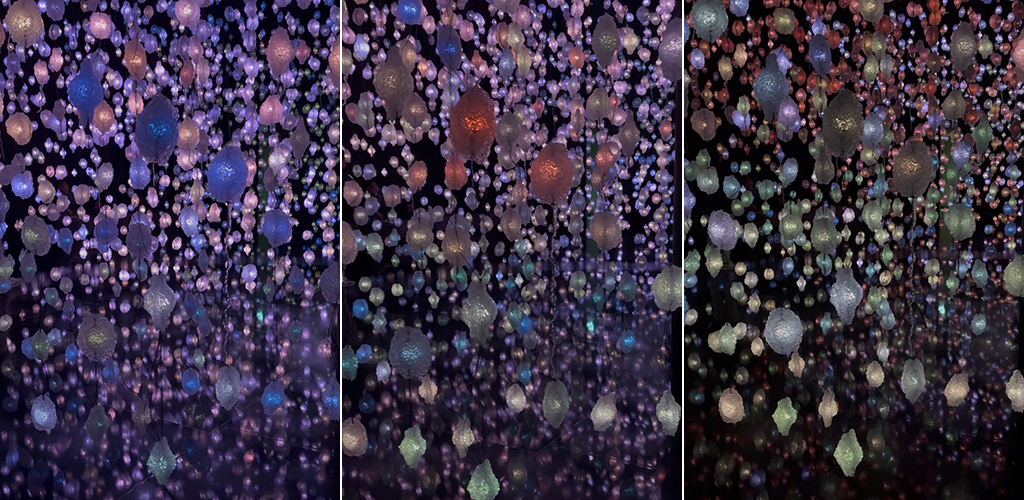
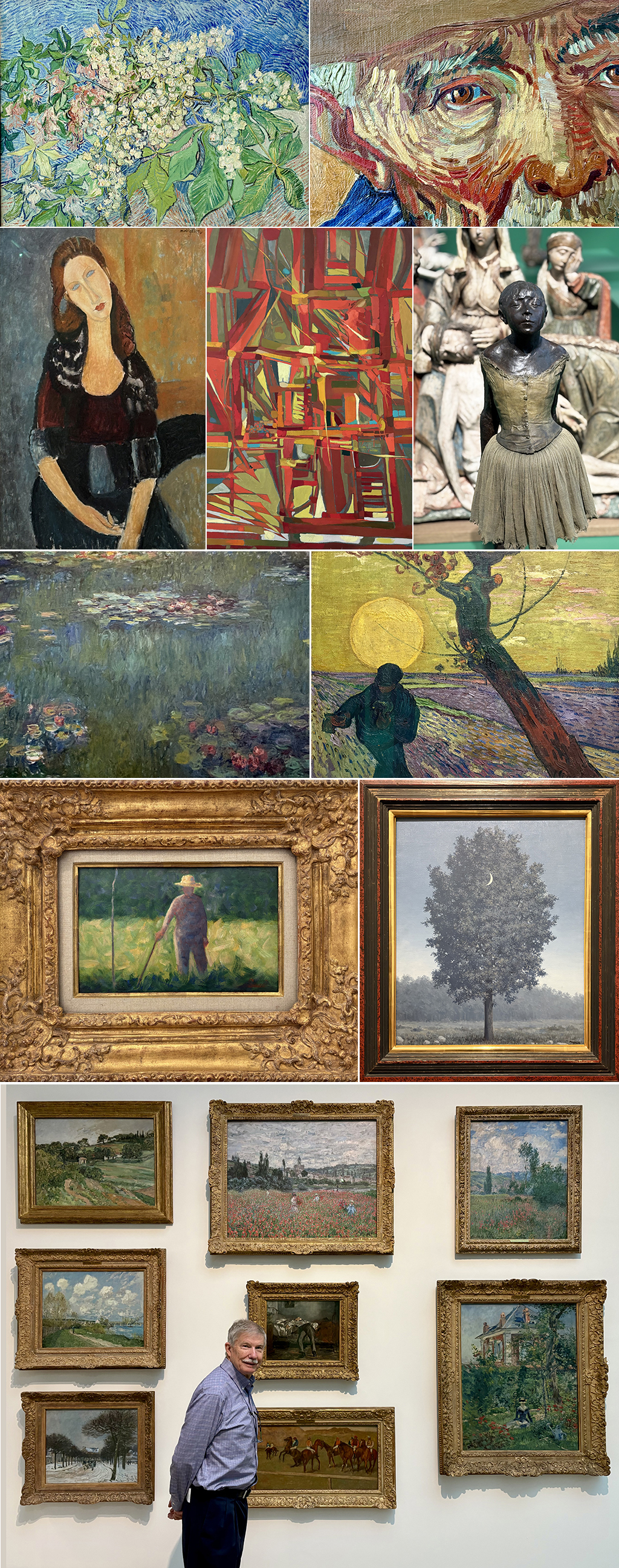
After the marketing was done, Alex took us down to the Kunsthaus Zürich, a large and impressive art museum. The museum collection is spectacular but there was one art installation in particular he was excited to share with us: “Turicum Pixelwald” (Pixel Forest Turicum) by Swiss artist Pipelotti Rist. It brings the concept of color as a symbol of life into the present and translates it into a spatially immersive installation with synchronized music.
The museum also boasts a large collection of some of the finest art in the world. In the wing we visited, one gallery featured works from the Emil Bührle collection, comprising mostly French impressionists and modern works, but also includes masters from the first half of the 19th century with a few 18th century pieces mixed in. These were arranged salon-style with labels in a handheld booklet. Both Mark and I have museum backgrounds, and we found it rather nice to take in the overall effect and individual works, without a feeling of obligation to read labels. The collection is rather controversial as Bührle was an arms dealer in World War II, and little is known about the provenance of the works he collected. The introductory signage was quite overt about this.
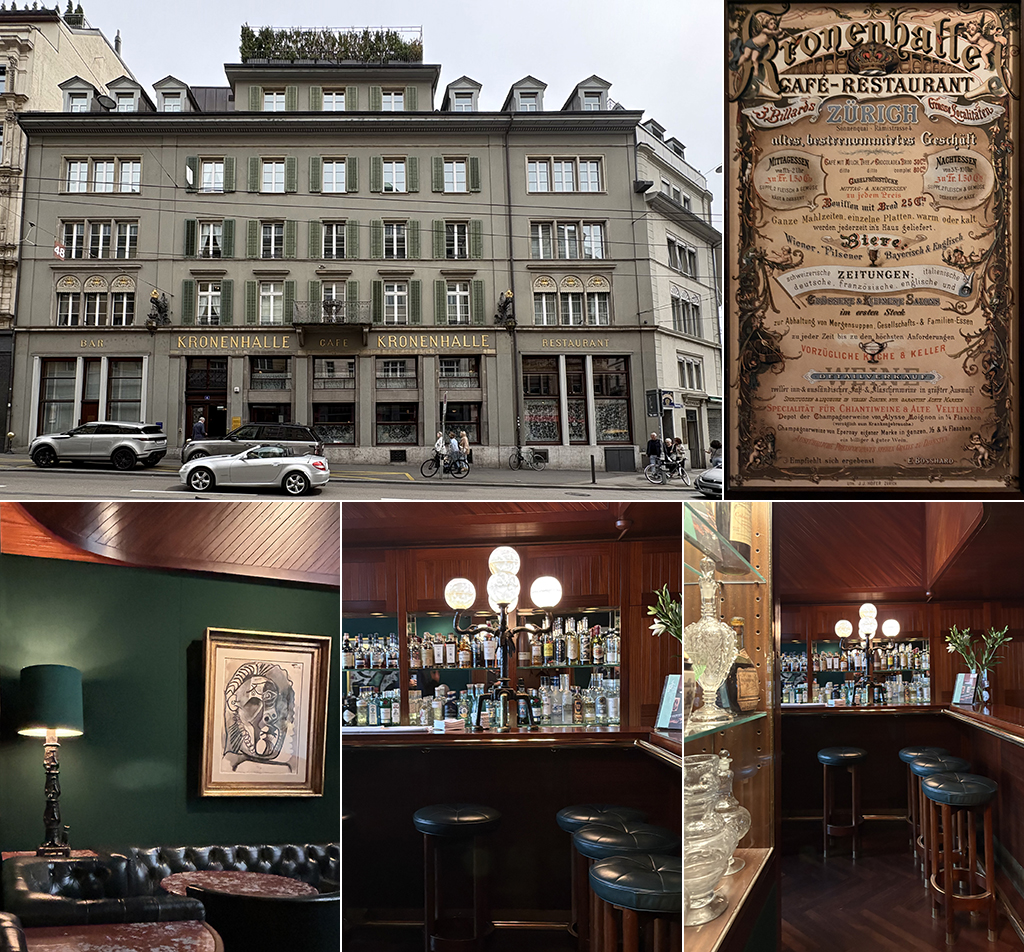
We then braved the rain to the nearest tram stop which took us down by the lake to a bar where Pauline caught up with us. The bar felt like an extension of the museum. The Kronenhalle Café and Restaurant is a Zürich institution, known for its warm atmosphere, fine service, traditional cuisine, and — perhaps above all — its collection of early-to-mid 20th century art: Chagall, Miró, Toulouse-Lautrec, Giacometti, Bonnard, Braque, and Kandinsky (to name a few).
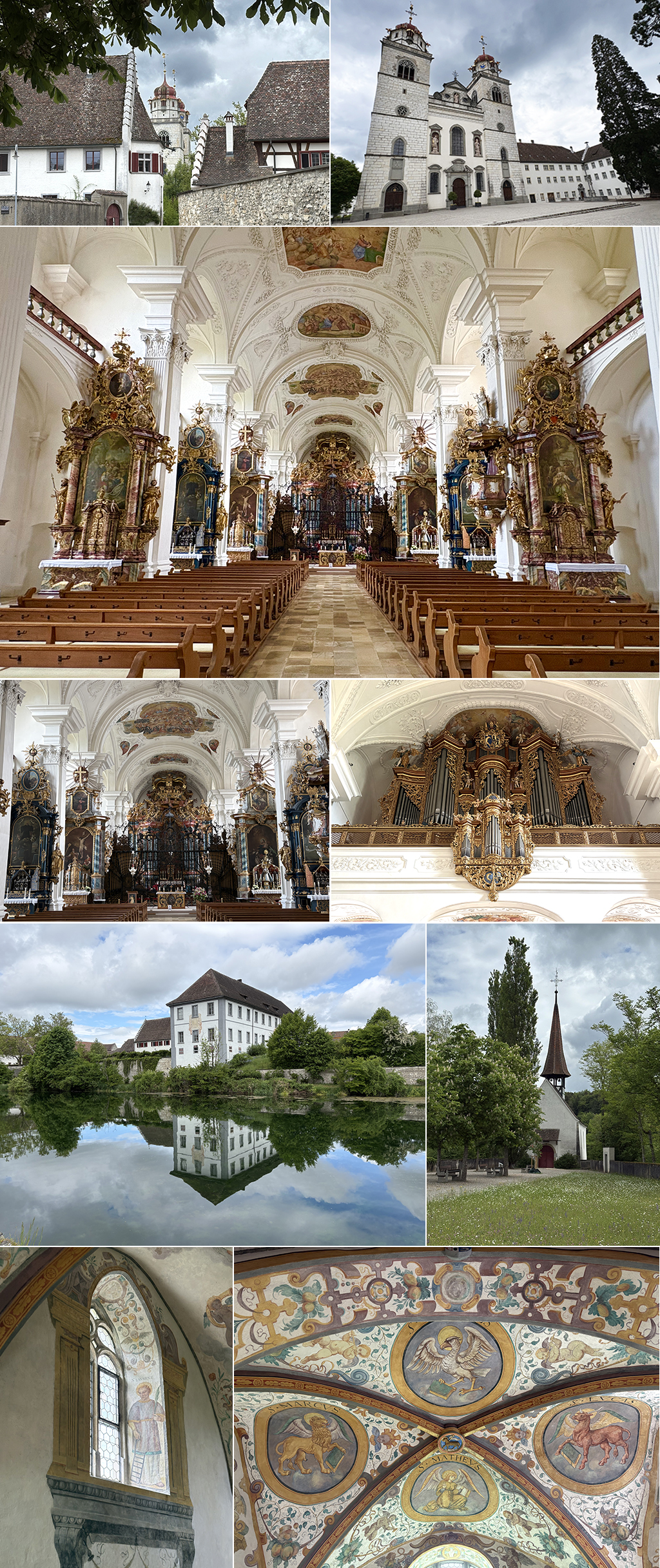
The next day — with the weather overcast but without rain,— Alex took us for a country drive north of the city. As we wove back and forth between Switzerland and Germany, we happened across the Rheinau Abbey. This stunning German late gothic-baroque church was on an island (Klosterinsel) in the Rhine between the two countries. Once a small group of other visitors left, we had the silent abbey church and its grounds to ourselves for exploration. It was a Benedictine monastery in Rheinau in the Canton of Zurich, Switzerland, founded in about 778 (and suppressed in 1862).
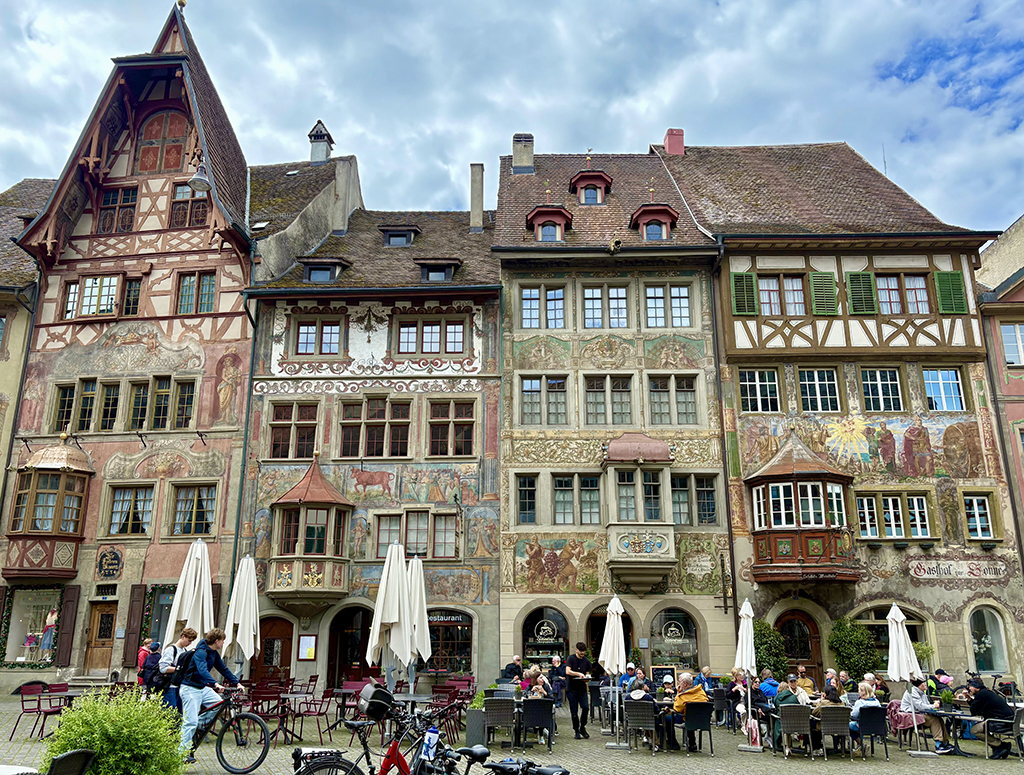
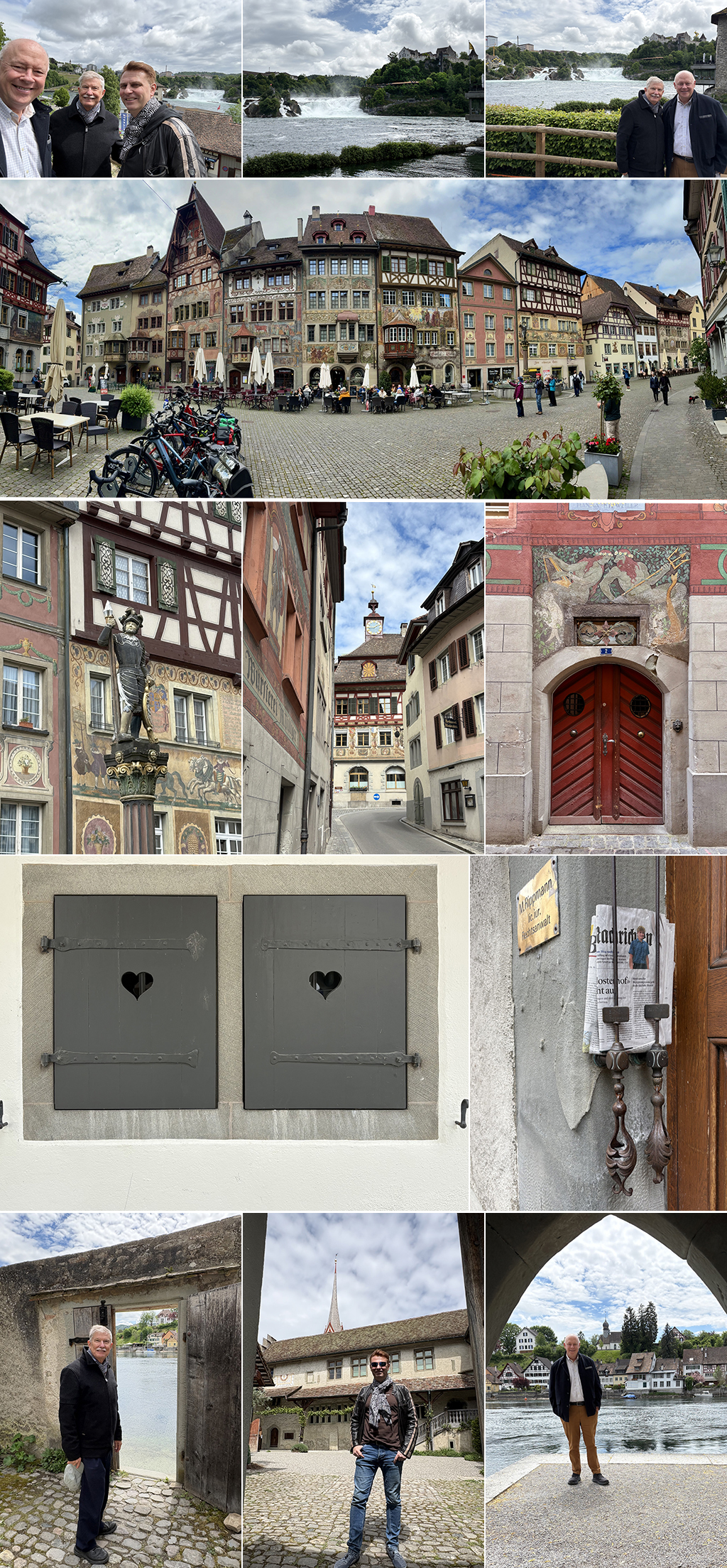
Then on to the Rheinfall (which were wide, loud, and beautiful) and then to the picturesque riverside town of Stein am Rhein. We wandered the streets for an hour or so, marveling at the building decoration, before heading back to the city for dinner on our our own at LaSalle (restaurant information at the end), a stylish restaurant within a converted industrial building.
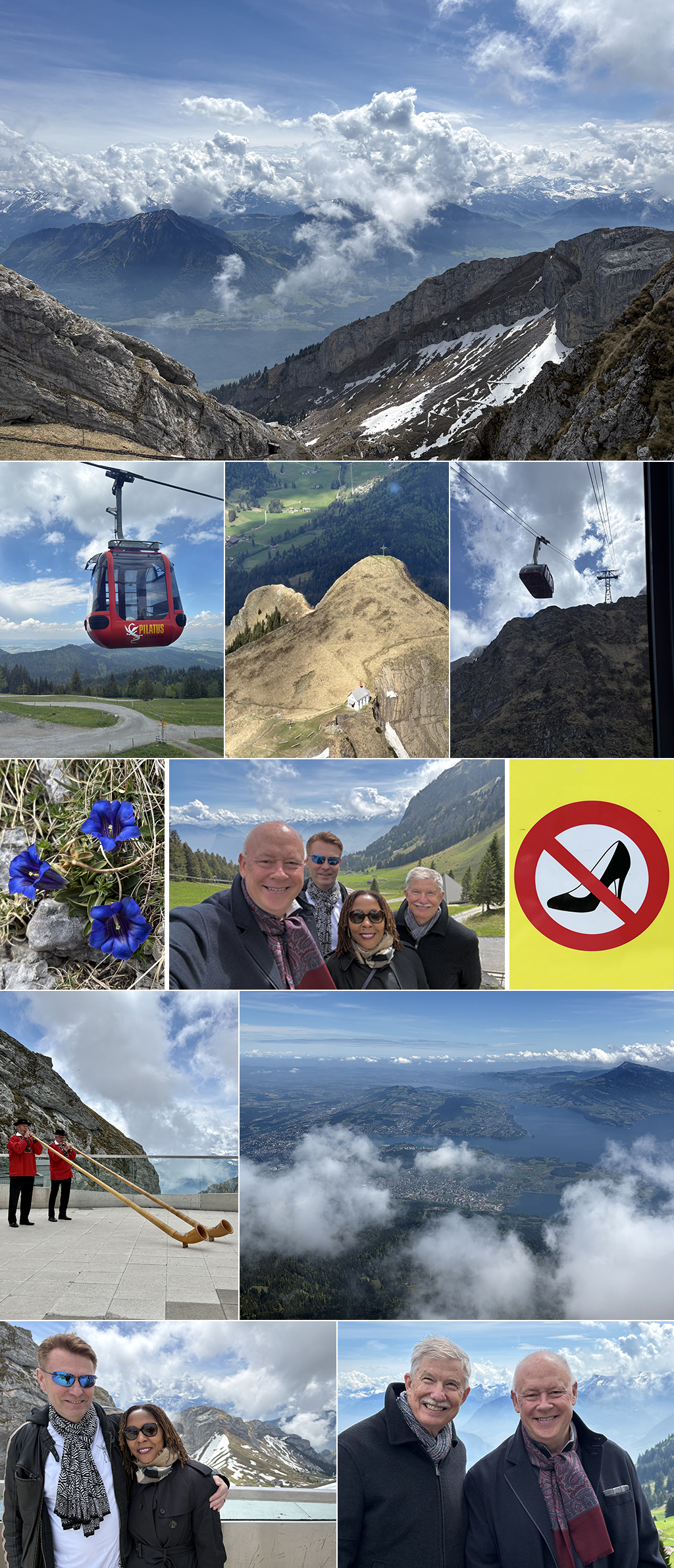
Another day’s outing took us south to Lucerne and into the northern edges of the famed Swiss Alps. In the town of Kriens, we picked up the aerial gondola to the summit of Mount Pilatus overlooking the expansive Lake Lucerne. As we arrived at the top, we were greeted by the unmistakable sound of alpenhorns, which made for a magical start to our explorations of the summit. Later, we also heard some authentic yodeling. The scenery was stunning and we had fun climbing as high as we could to see out over all of southern Switzerland and southward toward the Italian Alps.
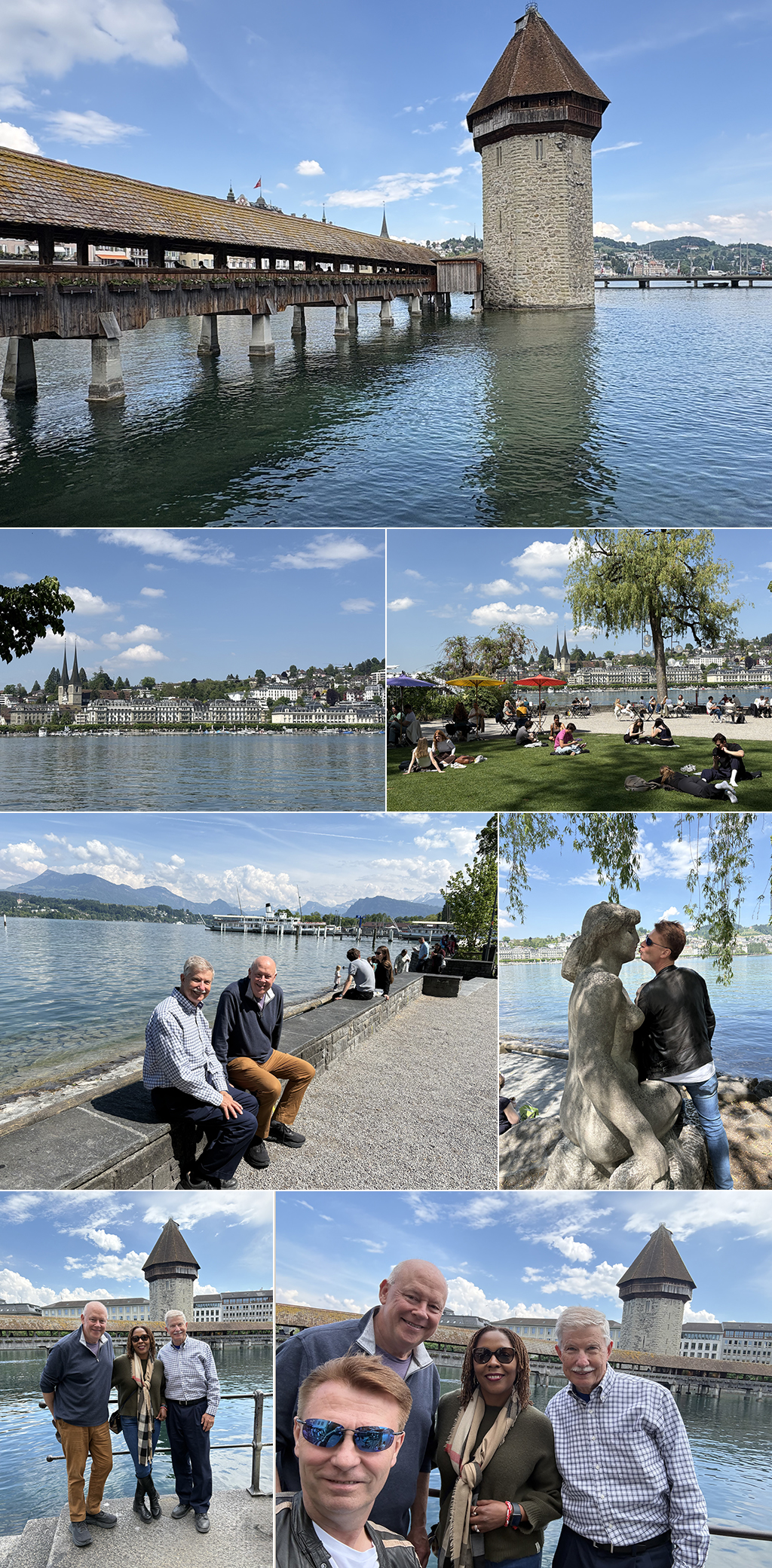
Once down from the mountain, we strolled through the waterside streets of Lucerne, including crossing its famous covered bridge.
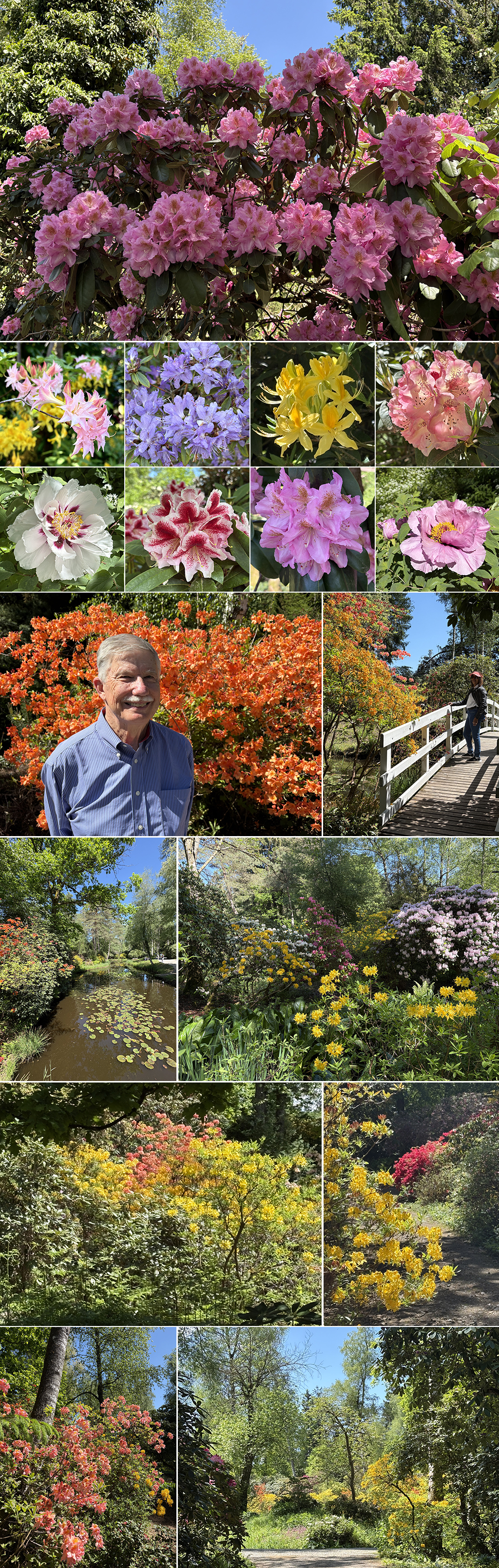
The next day, a visit to the Park Seleger Moor — on the southwest side of Lake Zürich — took our breaths away in a very different way than the previous day’s Alpine altitude. Seleger Moor is one of the most important upland moors in the Canton of Zürich. The park was created around a damp area in 1953 by Robert Seleger and it attracts more than 40,000 visitors every year. We meandered for two hours along the winding paths under all shade trees, among thousands of blossoming rhododendrons, azaleas, tree peonies, and wildflowers in all colors — we could not have been there at a more perfect time.
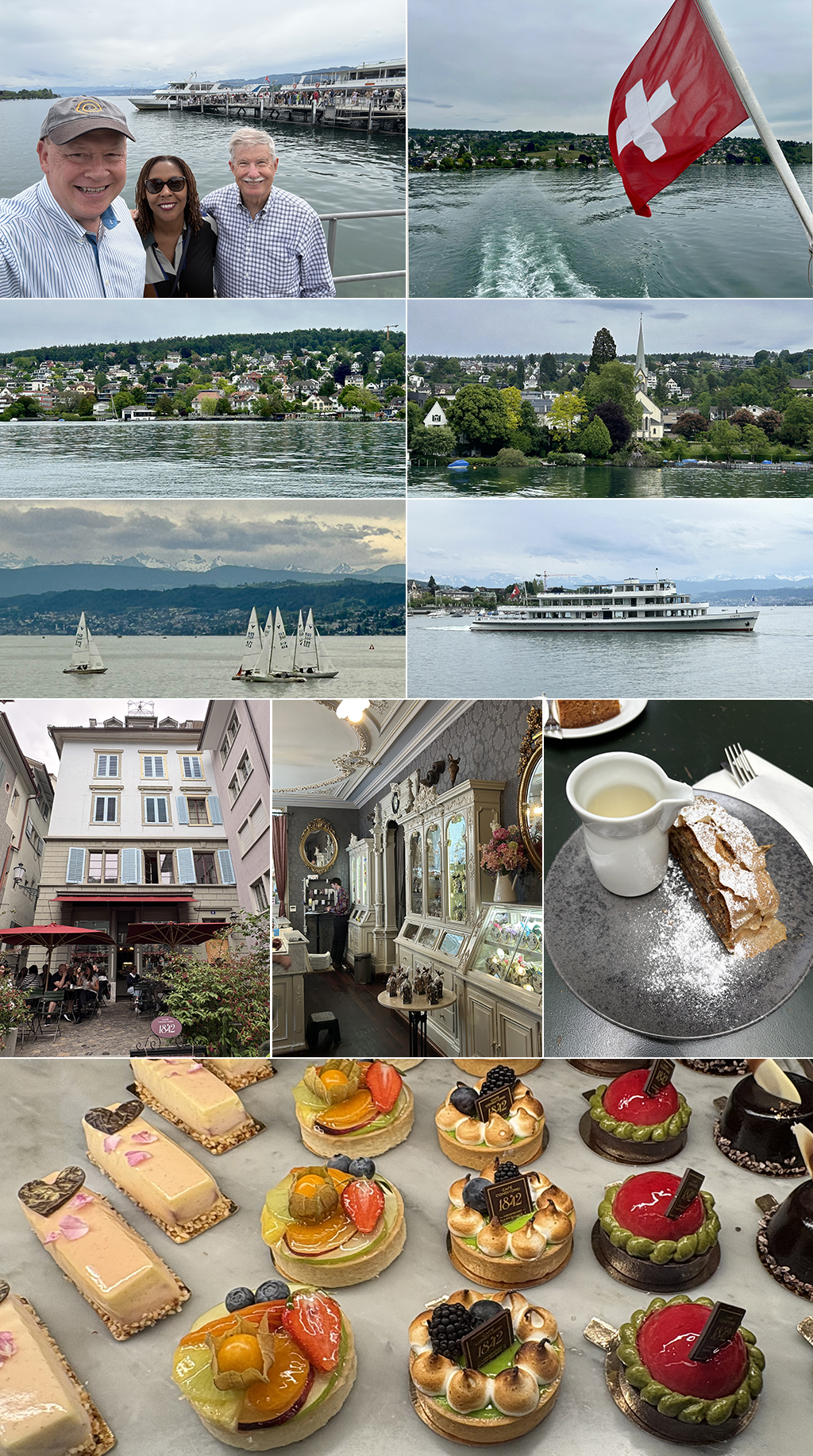
On our final day, Pauline took us out onto Lake Zürich for an hour-and-a-half boat cruise up and back, followed by pastries and hot chocolate at Café & Conditorei 1842. This charming café is a great place for some strudel and their delicious hot chocolate, which we enjoyed in a hidden courtyard. As part of the Arbeitskette Foundation, they have a mission to enable and promote the social and economic participation of people with disabilities, working to find opportunities for professional integration. Pretty cool, eh?
And now, the food. Zürich is a great food city — in fact some of the best food we had our entire six-week trip, which is no small claim, as our Swiss sojourn was flanked by time in France and Italy. Here are three recommendations:
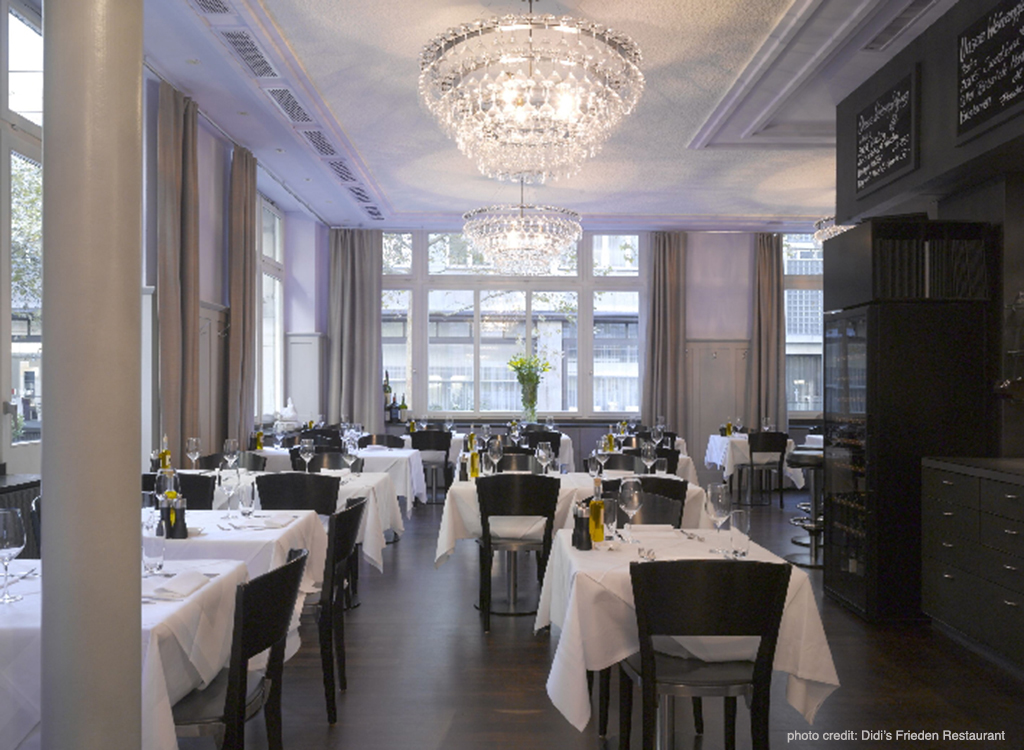
Didi’s Frieden Restaurant. Stampfenbachstrasse 32, 8006 Zürich. The restaurant, created by chef Didi Bruna, has a beautiful interior and is renowned for authentic, farm-to-table Swiss cuisine.
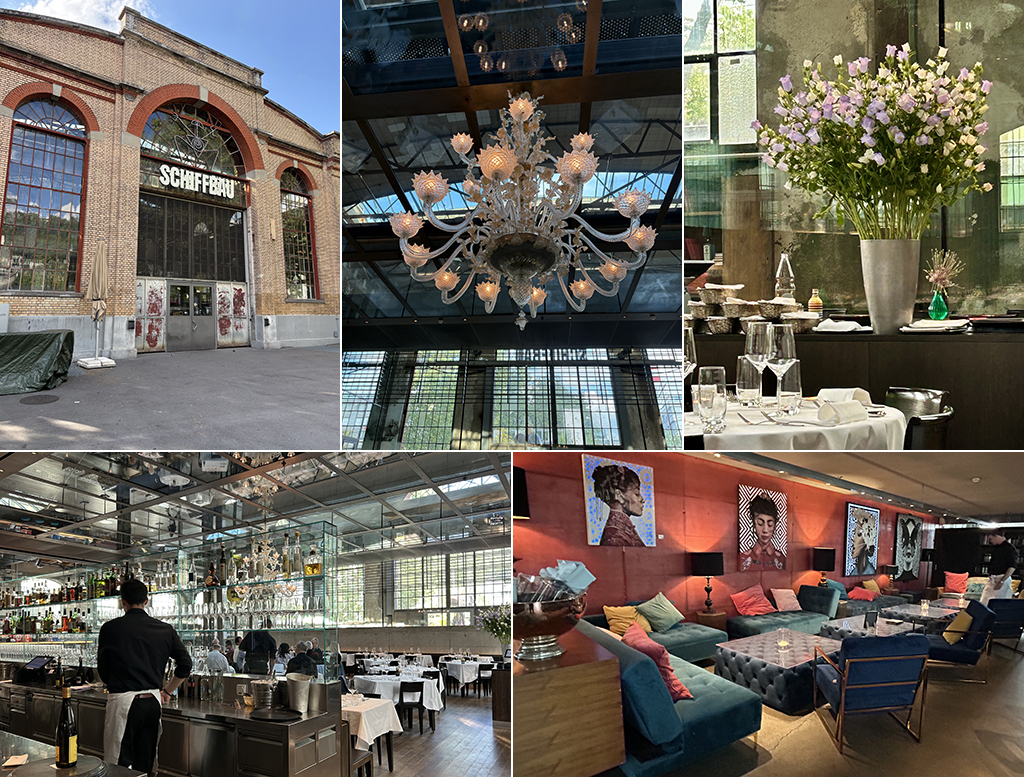
LaSalle. Schiffbaustrasse 4, 8005 Zürich. Chef Andreas Medewitz offers a menu of traditional Swiss classics and aromatic Mediterranean cuisine. It is housed in the Schiffbau building, a large, open-concept warehouse. Behind the open dining room is a colorful and inviting bar.
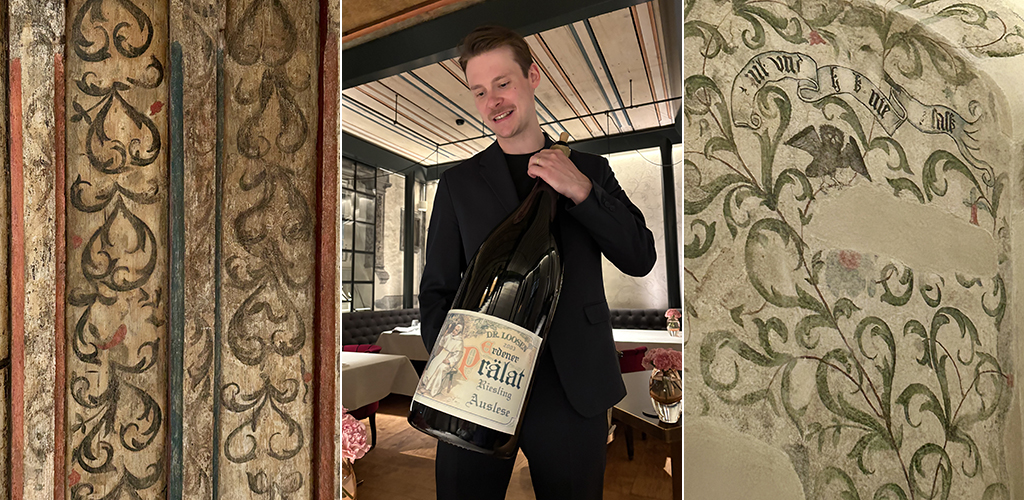
Widder Restaurant. Rennweg 7, 8001 Zürich. Obviously, saving the best for last, this restaurant is one of my top three restaurants for a truly memorable dining experience. (I will share the full menu and photos when I post a recipe I recreated.) Widder offers a prix fixe menu of five, six, or seven courses by Chef Stefan Heilemann (and pastry chef André Siedl). The presentation was exquisite and the wine pairings were perfect. Heilemann has earned the restaurant two Michelin stars.
Developed and maintained by Inspiratech LLC.
Design by Themeshift.
angiesrecipes
June 24, 2026 at 3:18 amThose houses, esp. the one on the first picture, are so German to me. Fun to see a high heel sign there…wonder who would wear high heel on the Alp. I love all those colourful blooms at the park.
David Scott Allen
June 25, 2026 at 4:48 pmThe houses reminded me of thise in Bavaria, especially Mittenwald and Garmisch-Partenkirchen… though I am sure they are in many areas of Germany. The fact is, we were only a few feet away from the German border there.
Ellen
June 24, 2026 at 4:48 amMy goodness, what a wonderful trip. But David – you omitted mention of your time travel! How did you manage to go back to 1980 and meet your much younger but equally handsome self holding that big bottle of wine?! A neat trick!
David Scott Allen
June 25, 2026 at 4:46 pmThat is so funny, Ellen — now that I look at him, he does look a bit like my old Heidelberg self, though I could nave have grown a mustache at that point in my life! (Not that his is all that wonderful…)
Eha Carr
June 24, 2026 at 5:35 amThank you SO much for this wonderful photo journey . . . some places new to me but many others remembering delightful times being there myself. Mark and you have a great collection of personal photos to look at back home over a glass of wine . . . you both look relaxed and happy . . . oh, I keep on going back to that one of the delicious cakes . . . and the gorgeous Mt Pilatus ones . . .
David Scott Allen
June 25, 2026 at 4:44 pmWe do have so many photos of our times abroad… thousands and thousands, and we do enjoy going back and remembering the fun times. Yes, thos pastries were quite something… and Mount Pilatus was just stunning!
Mimi Rippee
June 24, 2026 at 5:36 amHow beautiful! I love that top photo. I’m so glad we’ve spent time in Germany and Switzerland (and Austria). Such stunning countries. I love that we both had wild asparagus recently! Your meal looks so perfect!! How nice to have friends you can visit, get shown around, and eat with!!!
David Scott Allen
June 25, 2026 at 4:43 pmHaving done my study abroad in Germany, I have such a fondness for the German architecture and landscape. We were lucky to have our friends there… they are wonderful hosts! And that we both got to eat the wild asparagus is, well, wild!
Carolyne
June 24, 2026 at 6:22 amWhat a fabulous trip!
David Scott Allen
June 25, 2026 at 4:41 pmIt just ot better and better! I love traveling!!
FEL!X
June 24, 2026 at 6:25 amBtW: I was born just opposite the Rheinfall… Always have its sound in my mind and in my ear – even since I’m living far away here in Thailand!
David Scott Allen
June 25, 2026 at 4:41 pmWe must have been so close to your birthplace. It is such a beautiful area — you are fortunate to have grown up there, Felix!
Mad Dog
June 24, 2026 at 6:44 amAnother beautiful trip, especially the mountains! I love the wild asparagus and scallop napoleons, plus the fabulous pastries.
David Scott Allen
June 25, 2026 at 4:40 pmThe scallop napoleons are one of my signature dishes. If you ever get to Arizona, I will make them for you!
Barb
June 24, 2026 at 7:53 amThe architecture, landscape and food are all exquisite!! Perfect timing to enjoy all those gorgeous blooming plants! You and Mark are so fortunate to have friends there. I’ve never had wild asparagus. I assume it is tastier than the supermarket variety. Thanks for sharing this fabulous part of your trip!
David Scott Allen
June 25, 2026 at 4:39 pmBarb — I could not believe how perfect our timing was for the azaleas and rhododendrons! And our weather that day was picture perfect. The asparagus was nothing like what we get in the supermarket… it is nuttier and has a very different texture. I am so glad I got to try it!
Fran @ G'day Souffle
June 24, 2026 at 8:44 amGreat photos which place the viewer right in the experience! I tried yodeling several times (in the shower) but it didn’t work!
David Scott Allen
June 25, 2026 at 4:38 pmOh, come on… I yodel all the time in the shower. The Lonely Goatherd is in my basic repertoire! 🙂 Thanks for making me laugh, Fran!
Gerlinde
June 24, 2026 at 12:49 pmYou are making me homesick, David. I love all the places . Years ago , when I was a little child, I went with my grandfather and mother to the area you are visiting. I’ve been back there many times since I have friends in Zürich. One of them is a medieval flutist. Thanks for all the good tips on restaurants.
David Scott Allen
June 25, 2026 at 4:37 pmIt is funny how many connections a person can have to a city or region. I had no idea Zürich was one of the places you know well, Gerlinde. I think you will really enjoy the restaurants!
Ben | Havocinthekitchen
June 24, 2026 at 2:02 pmWhat a wonderful post, David! The views are gorgeous and the photos are beautiful – thanks for sharing. I’ve never been to Switzerland, but it’s definitely high on my bucket list.
David Scott Allen
June 25, 2026 at 4:35 pmIt is a beautiful corner of the world, Ben, and I hope you and Andrew get there someday soon!
Raymund
June 25, 2026 at 4:05 pmThis post made me a little homesick in the best way, Zürich really is my second home, and seeing all these photos just brings it all rushing back. Summer there hits different too… long bright evenings, lake days, markets overflowing with produce, and that easy, relaxed city energy. These days it all feels a bit bittersweet though. With Mum gone, the pull to go back isn’t as strong, and it’s one of those rare summers where we don’t have a trip planned. It gives me one less reason to return right now, even though the city still tugs at me in its own quiet way. Posts like this remind me why Zürich will always hold a piece of my heart.
David Scott Allen
June 25, 2026 at 4:34 pmI thought about you the entire time I was writing this post, Raymund. I don’t think I realized that you spent so much time in Zürich other than visiting your mother. It is a beautiful city and region — and I loved the evening light, too. I think someday oyu wil go back and the better memories will prevail. I just wish we had overlapped so we could have met.
Sherry M
June 27, 2026 at 11:42 pmoh my it is all so stunning David! the food the architecture the landscapes the buildings – all of it. oh yes and the artworks! Just gorgeous. what a marvellous trip you had!
sherry
David Scott Allen
June 30, 2026 at 2:37 pmI love that you are so into art, Sherry — it’s such a wonderful part of our lives!
Inger
June 29, 2026 at 7:36 amWe really enjoyed Switzerland too David! And I know what you mean about the train. We did a bus tour into the mountains and when two people wanted to stay longer at one stop, they just told the guide that they’d take the train back.
David Scott Allen
June 30, 2026 at 2:34 pmAt least the tour guides were flexible! I love the trains in Europe!
Christina
July 10, 2026 at 1:47 pmI love Zurich and Lucerne, but still haven’t done Mt Pilatus! I’ve added some new spots to my Google map, thank you! Here’s one for your next trip as I’ve been 2 or 3 times and love the atmosphere (food is good, too) https://www.zeughauskeller.ch/home
David Scott Allen
July 11, 2026 at 2:00 pmThanks for that recommendation! I’m sure, as we have good friends there, that we will get back to Zürich sooner than later. Looks wonderful.
Pauline
September 13, 2026 at 12:01 amI’ve never been to Zurich, but now I feel I almost have, how beautiful it all is, and the food, Incredible. I would love to visit. Alex and Pauline really look the part, and those pastries rival anything I saw in France. Food envy!!
David Scott Allen
September 15, 2026 at 4:13 amDon’t say it out loud to anyone, Pauline, but the food in Zürich far surpassed much of what we had in Paris!