Recipe for Couscous with Seven Vegetables and Tfaya
T.G.I.F.
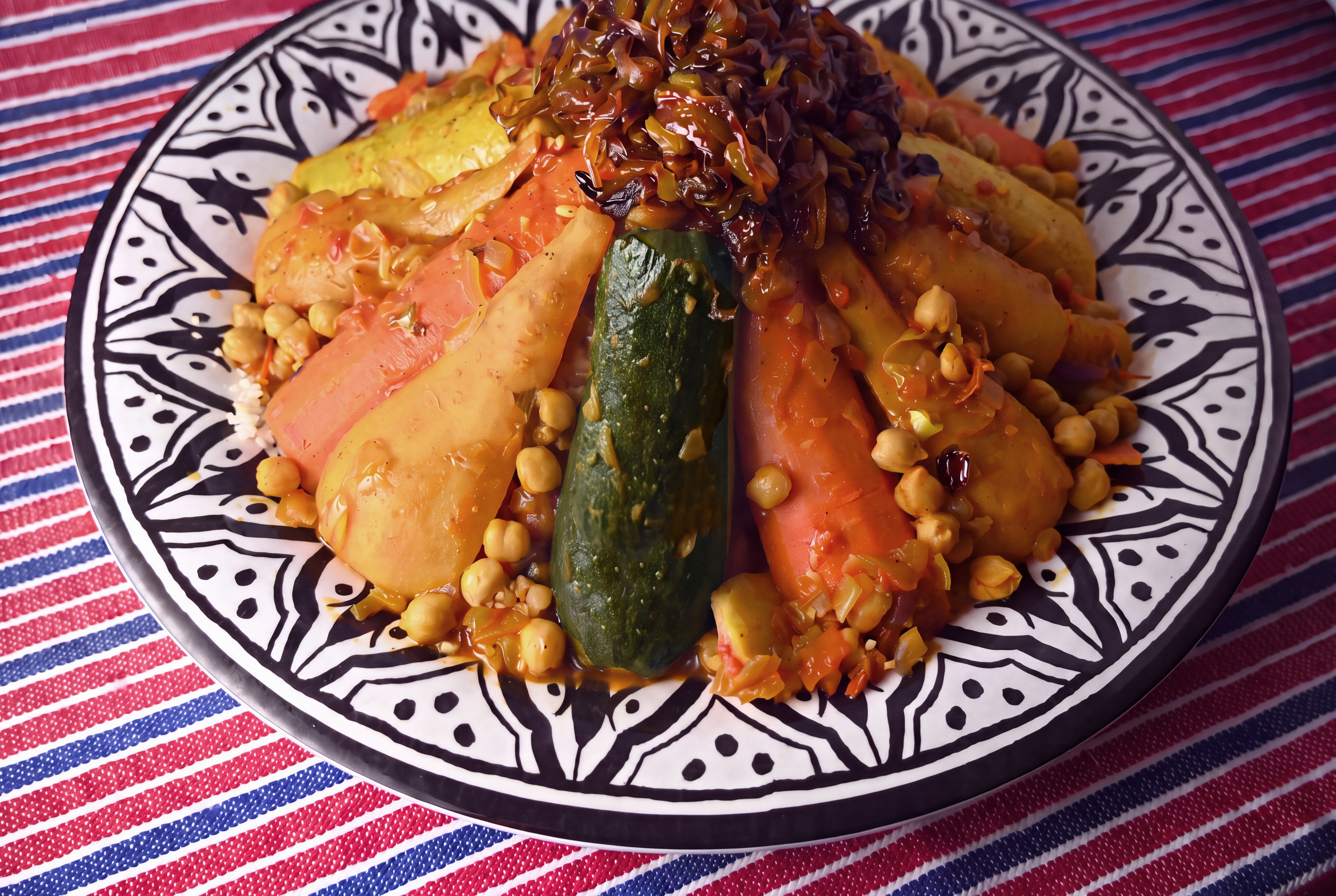
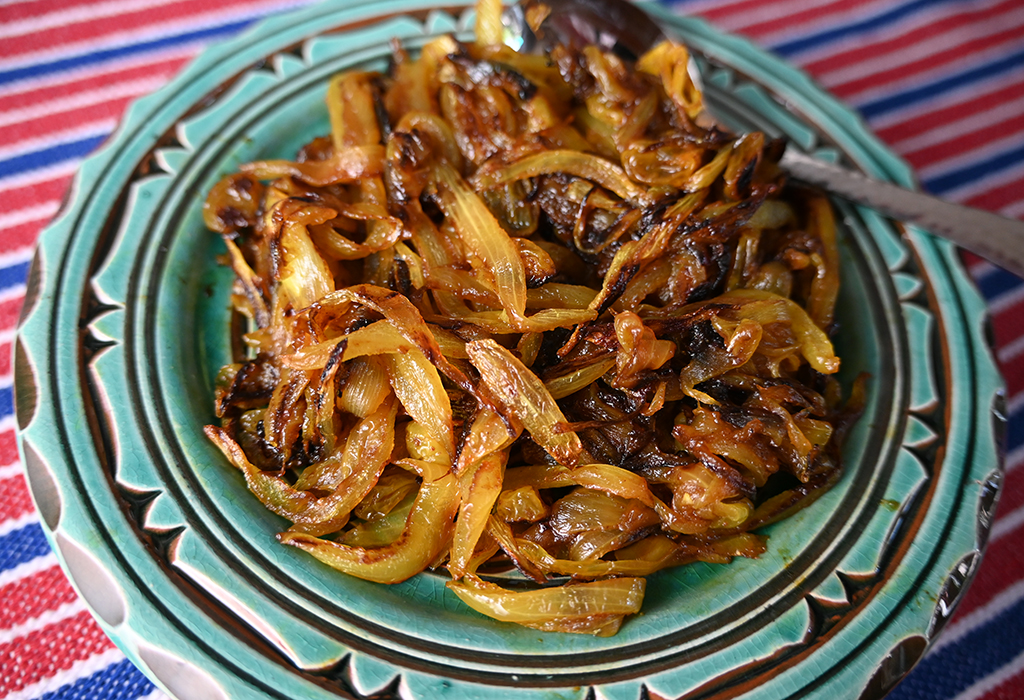
Fridays are holy days in Morocco and, every Friday, following the midday prayers, families gather to share in a special meal. The traditional Friday dish is a large platter of Couscous with Seven Vegetables, often topped with Tfaya, a dark, rich mixture of caramelized onions, raisins, and spices.
Couscous with seasonally varied vegetables was available in many riads and restaurants on any day of the week when we were there, and we often ordered it for lunches as it is much lighter than many other options. It isn’t always served with Tfaya but, if it’s offered, it’s worth getting.
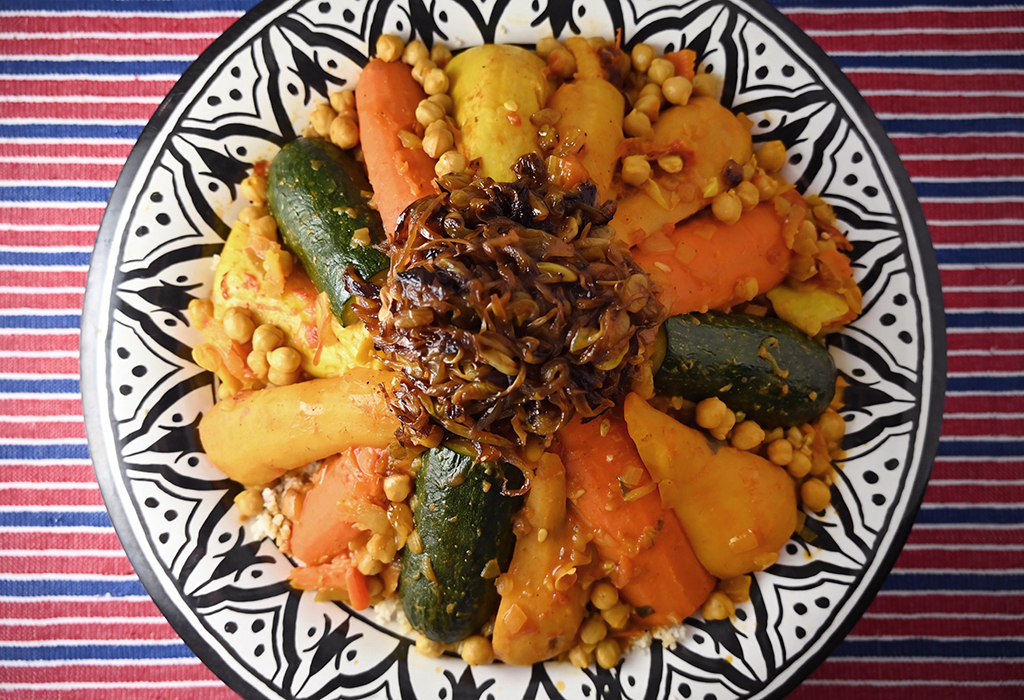
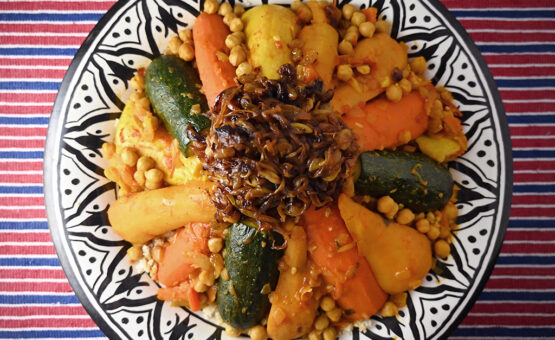
I’ve made this couscous several times and learned some valuable tips. First is the role of layering. You layer the prepared raw vegetables in a bowl of cold water, softest first, hardest last. Then, when ready to cook them, they are layered into the hot broth, hardest vegetables first, softest last, over a period of half an hour. Finally, for serving, all the cooked vegetables are layered in a decorative radial pattern on top of the couscous, then topped with the Tfaya.
I made my own vegetable broth (see notes), but you can use store bought vegetable broth or, if you aren’t vegetarian, chicken broth. Some cooks make it with plain water instead of broth, because all the vegetables themselves will create a rich broth. I have not tried this, but I’m sure it works fine. However I find that starting with a flavorful broth adds quite a bit to the final dish… and the leftover broth served in a bowl alongside the couscous is luscious.
This meal is a bit a time-consuming but it is spectacular when presented at the table for everyone to dig in. A further note about the vegetables. It can be any seven vegetables but the most traditional are pumpkin, zucchini, turnip, carrot, parsnip, cabbage, and chickpeas. These vegetables store well and are available year round, but Morocco’s infinitely-varied topography and agronomy surely lead to many seasonal and household variations. In these photos you will see I used two types of summer squash — zucchini and yellow squash — because pumpkin wasn’t readily available yet. See the notes for more options.
Islam does not permit drinking alcohol, however Moroccans are gracious hosts and they want their guests to be happy. We found that wine is often available in riads and restaurants that serve foreign tourists, or they will allow you to bring your own (available at wineries and in some supermarkets) and will serve it to you. Availability will also depend on the size of the city. At home, I planned to serve this with a white wine from Provence, but — because of the strong flavors in the couscous — I switched to a red wine from the Luberon. You can read more about the selections on the Provence WineZine.
3 to 4cupsthinly sliced yellow onionsabout 1 pound
1/3cupgolden raisinssultanas
1/2teaspoonground ginger
1/4teaspooncinnamon
1/4teaspoonturmeric
1/4teaspoonsalt
1tablespoonhoney
Vegetables
1/2small green cabbagetrimmed
2small zucchini
1/2small pumpkinseeded and peeled
1large carrotpeeled
1large parsnippeeled
1large turnippeeled
3tablespoonsolive oil
1large yellow onionchopped
2large tomatoespeeled and diced
1tablespoonturmeric
1tablespoonground ginger
1tablespoonsweet paprika
2teaspoonsblack pepper
1teaspoonsalt
1bunch of parsleytied (see note)
4cupsvegetable brothdivided
1tablespoontomato paste
1canchickpeas (garbanzos)rinsed and drained
Couscous
2cupsinstant couscous
2cupswater
1teaspoonsalt
1tablespoonolive oil
cilantroif not serving Tfaya
Instructions
Make the Tfaya
I make this first because it can take nearly an hour and would be difficult to do simultaneously while preparing the vegetables. Place the oil in a large nonstick skillet over medium heat. Add the sliced onions and stir to coat.
Meanwhile, put the raisins in a bowl and add warm water to cover.
After 5-8 minutes, when the onions have started to soften, reduce the heat and stir in the ginger, cinnamon, turmeric, and salt. Cook on medium-low heat, stirring occasionally, until onions get very soft and begin to caramelize — about 15 minutes. Add the honey and stir to distribute. Drain raisins and squeeze out excess water, then add to the onions, and stir.
Raise the heat to medium and continue to cook for 15-20 minutes, stirring occasionally, until the Tfaya is a golden brown. Set aside, to reheat at serving time.
Prepare the Vegetables
Place the vegetables in a large bowl of cool water as you finish preparing each, in this order: Keeping the stem end intact, cut the cabbage into four wedges. Trim the zucchini ends, and cut in half lengthwise. Cut the half pumpkin into four wedges. Trim tops and bottoms of carrot and parsnip, then cut in half crosswise, then in half lengthwise. Cut the turnip into 4 wedges. Set aside the vegetables in their bowl of cool water.
Heat the olive oil in a large pot over medium heat. Add the chopped onions and cook until soft — 5 minutes. Add the chopped tomatoes and continue cooking for 5 minutes until they have broken down. Add the spices (turmeric, ginger, paprika, pepper) and salt; cook 1 minute. Add the tightly tied bouquet of parsley and 1/4 cup of the vegetable broth; cook for 10-15 minutes over medium-low heat, stirring frequently to keep it from sticking. You want to have the flavors blend well.
Add the tomato paste to the onion/tomato mixture and stir well. Add the remaining broth and bring to a gentle boil.
Add the hardest vegetables first: carrots and turnips. Stir to cover the vegetables, bring to a brisk simmer, and cover the pot. After 5 minutes, add the parsnips, and cover.
After 5 minutes more, add the pumpkin; stir gently, cover.
After 10 minutes, add the zucchini and cabbage, and cover.
After another 10 minutes, add the chickpeas, cover and cook until heated through — about 1 minute
Check that all vegetables are tender and broth has thickened a bit. Remove and discard the parsley. Keep the vegetables warm while you make the couscous.
Make the Couscous
Bring two cups water to a boil. Add couscous, salt, and olive oil; stir to combine.
Cover tightly, remove from heat and let sit 5 minutes. (While the couscous is steaming, reheat the Tfaya.) Remove cover and fluff couscous.
Assemble the Couscous
Mound the couscous on a large serving platter. Moisten the couscous with a ladleful or two of the broth, then start arranging the vegetables.
Begin by putting the cabbage on the top in the center to create a full cone shape, then make alternating radial “stripes” of the other vegetables around the mound of couscous, as seen in the photos. Strain out the chickpeas and scatter over the other vegetables. Top with Tfaya. If not serving it with Tfaya, garnish with chopped cilantro. Serve a bowl of broth on the side.
Notes
Serves 6 to 8. (It will serve up to 10 if preceded by traditional Moroccan Salads.)Homemade vegetable broth is quite easy. When you trim vegetables, keep all the trimmings in a jar or bag in the freezer. Good scraps to save are: onion/shallot/leek, tomato, carrot, celery, fennel. Make sure you have a good balance of scraps and that it isn’t all onion! When the time comes to make broth, put all the scraps in a saucepan and add water — about half as much more than the amount of broth you need. (If you need 4 cups broth, add 6 cups water). Add some salt, pepper, and herbs (thyme, bay leaf) and additional veggies you might have on hand: carrots, celery, onion, tomato. Bring everything to a boil, then reduce heat and simmer until you reach the amount of broth you need — about 20-30 minutes. Strain and use.Using a 3-foot (1-meter) piece of kitchen string, tie the parsley stems together then wrap the bunch of parsley in a spiral — it will be easier to remove later.Here are some other options for vegetables to use in this couscous:
Double-peeled fava beans can be used in place of the chickpeas.
Sweet potato or butternut squash is sometimes used instead of pumpkin
Eggplant appears in some recipes.
Choose the vegetables you like and that are in season where you live. It will give you a wonderful platter of goodness to serve.Make sure you adjust the simmering times when you vary the vegetable choices. This will take some thinking… sweet potato may cook the same time as pumpkin, or it might be best to add a little later, with the parsnips. Eggplant will cook quickly, so perhaps add with the zucchini. Use your judgement, experience… and poke with a fork to test.
I wish I had taken a class for this dish, Mimi. It is what I remember and what I’ve had to figure out on my own — and it isn’t as simple as one might think! While it doesn’t take an entire day to make, it does take a bit of time and energy to get it onto the table.
Love how you plated the food! So elegant and inviting. I am not really a fan of vegetables (usually use them as a decoration and dump them from my plate later; my husband is the one who eats the vegetables), but have to try that tfaya…looks so GOOD!
That looks amazing! That’s interesting about the use of stock or water. There are quite a lot of basic rural Spanish dishes where they just use water and salt, but I believe this is mostly down to historic poverty. Most of the recipes I’ve come across benefit from the flavour in the stock, as opposed to water. Sopa de Ajo is a good example.
Morocco does have a successful wine industry and it’s considered to be good wine. It’s said that the Phoenicians introduced the vines and the industry expanded under the Romans. French colonists continued the tradition with the very best wines being exported to France to this present day.
Thanks, Mad Dog. I do think that poverty had a lot to do with using water vs stocks, but if you’re peeling vegetables and have scraps of vegetables, there’s no reason not to have vegetable stock! (At least in my humble opinion.) It really does enrich the flavor of the dish.
We visited a winery while in Morocco, down by Essaouira, and it was owned by a wonderful man who had been brought up in Châteauneuf du Pape. He created Rhône-style wines that were just beautiful! Next time I’m in Paris, I will have to look for the Moroccan wines there. And never thought to do that before. By the way, if you want to see what I wrote about wines, the post is now available.
I have bags of scraps in my freezer for stock: beef bones, poultry bones, lamb bones, shrimp shells (and fish parts). And all variety of veggies. When I want to make a small batch of stock, I am all set.
Although this recipe is not one I would likely make I very much enjoyed reading about it. It’s a work of art! I couldn’t find the wine review on the Provence Wine site.
First, thanks for checking back on the Provence WineZine. I’m glad you were able to read it. Not many are likely to make this recipe. But I wanted to do it to show the beauty of it, the complexity of it, and the incredible flavors it has. Thanks, Barb!


Mimi Rippee
October 3, 2026 at 5:08 amIt’s so beautiful! I would love the tfaya. We took a cooking class in a private home in a riad and it was so much fun.
David Scott Allen
October 3, 2026 at 7:47 amI wish I had taken a class for this dish, Mimi. It is what I remember and what I’ve had to figure out on my own — and it isn’t as simple as one might think! While it doesn’t take an entire day to make, it does take a bit of time and energy to get it onto the table.
angiesrecipes
October 3, 2026 at 5:55 amLove how you plated the food! So elegant and inviting. I am not really a fan of vegetables (usually use them as a decoration and dump them from my plate later; my husband is the one who eats the vegetables), but have to try that tfaya…looks so GOOD!
David Scott Allen
October 3, 2026 at 7:45 amThanks, Angie, I guess I never really knew how much you would dislike vegetables! Me, I love vegetables! The Tfaya is amazing.
Mad Dog
October 3, 2026 at 6:05 amThat looks amazing! That’s interesting about the use of stock or water. There are quite a lot of basic rural Spanish dishes where they just use water and salt, but I believe this is mostly down to historic poverty. Most of the recipes I’ve come across benefit from the flavour in the stock, as opposed to water. Sopa de Ajo is a good example.
Morocco does have a successful wine industry and it’s considered to be good wine. It’s said that the Phoenicians introduced the vines and the industry expanded under the Romans. French colonists continued the tradition with the very best wines being exported to France to this present day.
David Scott Allen
October 3, 2026 at 7:44 amThanks, Mad Dog. I do think that poverty had a lot to do with using water vs stocks, but if you’re peeling vegetables and have scraps of vegetables, there’s no reason not to have vegetable stock! (At least in my humble opinion.) It really does enrich the flavor of the dish.
We visited a winery while in Morocco, down by Essaouira, and it was owned by a wonderful man who had been brought up in Châteauneuf du Pape. He created Rhône-style wines that were just beautiful! Next time I’m in Paris, I will have to look for the Moroccan wines there. And never thought to do that before. By the way, if you want to see what I wrote about wines, the post is now available.
Mad Dog
October 3, 2026 at 9:23 amI’m with you on the stock – I make it several times a week, so I’ve always got something to create a sauce.
David Scott Allen
October 3, 2026 at 10:32 amI have bags of scraps in my freezer for stock: beef bones, poultry bones, lamb bones, shrimp shells (and fish parts). And all variety of veggies. When I want to make a small batch of stock, I am all set.
Barb
October 3, 2026 at 7:04 amAlthough this recipe is not one I would likely make I very much enjoyed reading about it. It’s a work of art! I couldn’t find the wine review on the Provence Wine site.
David Scott Allen
October 3, 2026 at 7:41 amFirst, thanks for checking back on the Provence WineZine. I’m glad you were able to read it. Not many are likely to make this recipe. But I wanted to do it to show the beauty of it, the complexity of it, and the incredible flavors it has. Thanks, Barb!