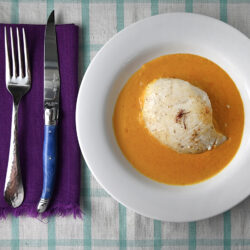
Halibut Cheeks with Tomato Saffron Cream Sauce
Ingredients
- 2 large halibut cheeks or firm white fish, about 3/4 pound
- salt
- freshly ground white or black pepper
- 2 tablespoons unsalted butter
- 1 shallot minced
- 1/2 teaspoon hot paprika
- 2 tomatoes seeded and grated, about 1 cup(see note)
- a big pinch of saffron threads plus extra
- 1/4 cup white wine
- 1/4 cup cream
- 3 tablespoons canola oil
Instructions
- Salt and pepper the halibut cheeks on both sides, and set them aside.
- Place the butter in a large skillet over medium heat. When it's hot, add the shallot and cook gently until translucent — 4 to 5 minutes. Add the hot paprika and stir for 30 seconds.
- Add in the grated tomatoes (see notes) and saffron threads; stir and bring to a simmer. Cook over medium heat until thickened, about 5 minutes.
- Pour in the white wine and continue simmering until thick again — about 3-4 minutes. Transfer to a blender or food processor, making sure to get all the bits out of the pan, and purée. Return to the pan and add the cream; stir to blend and set aside until ready to serve.
- Preheat oven to 350°F.
- Heat a 10-inch ovenproof skillet over high heat and add the oil. Pat the halibut cheeks dry as the oil warms. When hot, add the cheeks flat side down in the pan.
- Reduce heat just a little and sear the fish undisturbed for 4 minutes. Turn them and continue to sear for 30 seconds. Remove from the cooktop and place in the oven for 5 minutes to finish.
- Meanwhile reheat the sauce and divide among two shallow soups plates. Carefully transfer the cooked halibut cheeks to each plate, garnish with a few saffron threads, and serve.
Notes
Serves 2.
To grate the tomatoes (see video below), cut them across the equator and scoop out the seeds. Then, using the large holes on a box grater (in a shallow bowl), place the flat side of the tomato onto the grater and, with your hand flat and parallel to the grater, begin grating. The skin will stay in your hand while the flesh goes into the bowl. You should have about 1 cup tomato pulp.
If you wish to use tomato passata instead of grating a fresh tomato, use less as it is already quite concentrated — perhaps 2/3 cup. It will take less time to thicken, as well.