Recipe for Halibut Cheeks with Tomato Saffron Cream
Cheeky.
The first cheeks I ever had were cod cheeks; they were deep fried and served with a side of fries. Basically, upscale fish and chips. I was amazed how sweet and tender they were but saw them offered on a menu only that one time. It wasn’t until we moved to Tucson that I discovered beef and pork cheeks — again, so sweet and tender, but hard to find. (Perhaps restaurants have cornered the market for them?)
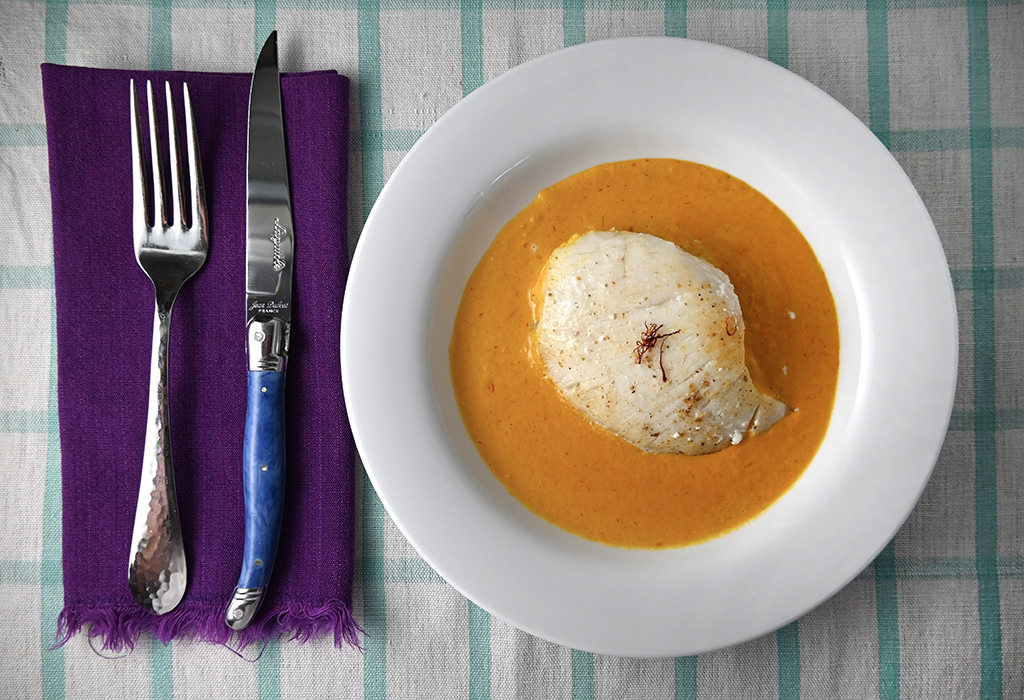
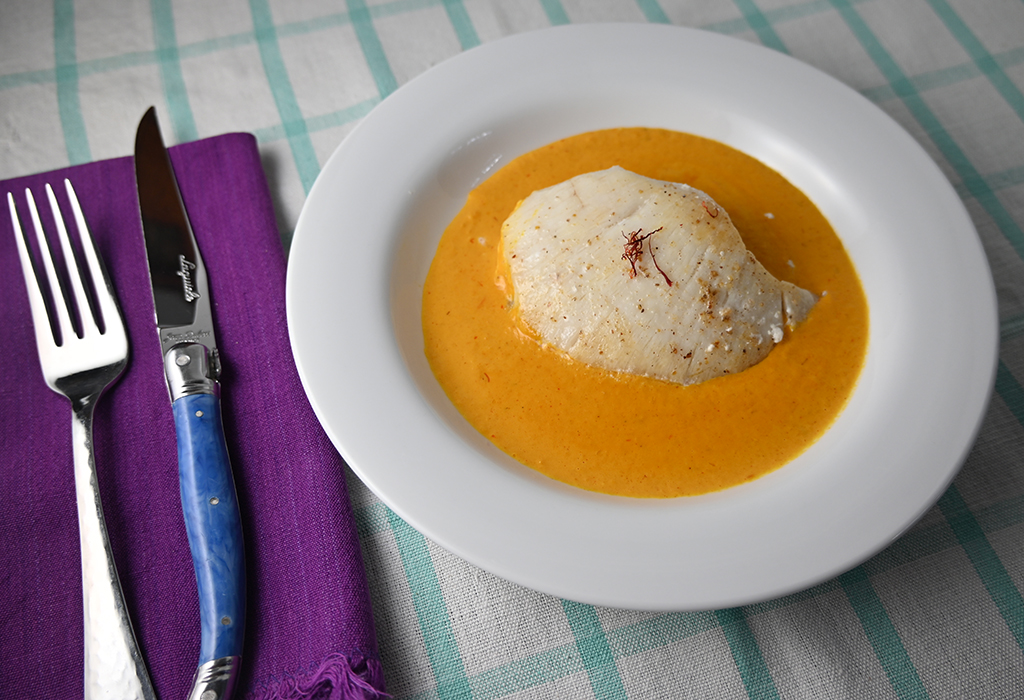
When I was ordering some elk medallions from Beck & Bulow in New Mexico (a fantastic resource for meats, poultry, and fish/seafood), I was delighted to learn they also carry halibut cheeks. With my past cheeky experiences, I was pretty sure I was in for a treat. (Spoiler alert: they were a treat!) One good-sized halibut cheek is a perfect serving size, as they are not only sweet, but very rich. Of course I made them more so by serving them in a tomato saffron cream sauce. This dish can be made with halibut fillets, or any other firm white fish, but if cheeks are available, grab them!
2large halibut cheeksor firm white fish, about 3/4 pound
salt
freshly ground whiteor black pepper
2tablespoonsunsalted butter
1shallotminced
1/2teaspoonhot paprika
2tomatoesseeded and grated, about 1 cup(see note)
a big pinch of saffron threadsplus extra
1/4cupwhite wine
1/4cupcream
3tablespoonscanola oil
Instructions
Salt and pepper the halibut cheeks on both sides, and set them aside.
Place the butter in a large skillet over medium heat. When it’s hot, add the shallot and cook gently until translucent — 4 to 5 minutes. Add the hot paprika and stir for 30 seconds.
Add in the grated tomatoes (see notes) and saffron threads; stir and bring to a simmer. Cook over medium heat until thickened, about 5 minutes.
Pour in the white wine and continue simmering until thick again — about 3-4 minutes. Transfer to a blender or food processor, making sure to get all the bits out of the pan, and purée. Return to the pan and add the cream; stir to blend and set aside until ready to serve.
Preheat oven to 350°F.
Heat a 10-inch ovenproof skillet over high heat and add the oil. Pat the halibut cheeks dry as the oil warms. When hot, add the cheeks flat side down in the pan.
Reduce heat just a little and sear the fish undisturbed for 4 minutes. Turn them and continue to sear for 30 seconds. Remove from the cooktop and place in the oven for 5 minutes to finish.
Meanwhile reheat the sauce and divide among two shallow soups plates. Carefully transfer the cooked halibut cheeks to each plate, garnish with a few saffron threads, and serve.
Notes
Serves 2.To grate the tomatoes (see video below), cut them across the equator and scoop out the seeds. Then, using the large holes on a box grater (in a shallow bowl), place the flat side of the tomato onto the grater and, with your hand flat and parallel to the grater, begin grating. The skin will stay in your hand while the flesh goes into the bowl. You should have about 1 cup tomato pulp.If you wish to use tomato passata instead of grating a fresh tomato, use less as it is already quite concentrated — perhaps 2/3 cup. It will take less time to thicken, as well.
I’ve honestly never heard of fish cheeks before (beef cheeks, yes). It seems to me that fish have such small heads there wouldn’t be enough flesh in the cheeks (but then, what do I know)? Those sweet cheeks combined with the saffron cream sauce sounds like a winner!
That looks and sounds amazing – I’d buy them and cook this! I’ll ask at the fish stall.
Cod and hake cheeks are very popular in Spain and especially in País Vasco. In the old days, fish were so cheap (of little profit) that fishermen kept the heads to feed their families. Hake throat is a particular delicacy, something that was once a throw away item now costs more than the fish itself! The throats can go for €70 per kg, whereas hake is about €12 per kg in the market.
Bacalao pil pil is often made with salt cod cheeks – the gelatin in the cheek emulsifies the olive oil that it’s cooked in. This is cooked very slowly and agitated by rocking the cazuela. It’s allowed to warm up and then turned off and agitated. This happens a few times before the sauce thickens. If it’s stirred the emulsification doesn’t happen. Bacalao pil pil does contain garlic, which supposedly helps in the emulsification, but there’s so much gelatin in cod cheeks, I think it might work without it!
I hope you can find them in your fish stall (or even the hake or cod cheeks — btw, I miss getting hake. None here in Tucson) — they are the best, and few people seem to know about the cheeks. Those prices are unbelievable but the halibut cheeks are pricy, too.
I love reading about the Bacalao Pil Pil. Do you think it would work with fresh cheeks? The method is fascinating. I would neve rhave known not to stir it. The things people figure out — probably by accident. Thanks for this, Mad Dog.
In Basque and Spanish cooking there’s a lot of shaking and agitating the pan. Stirring can ruin the texture and adhesion. Paella should never be stirred after the rice and stock have been mixed together. Pil Pil really does break and stay liquid if stirred!
I think I will try to find them online, as I’m sure that is better than doing a homemade version!
We took a paella class in Sevilla and they’re never disturb once you put in the rice in the liquid. It’s worked very well.
This looks like right out of a star restaurant, David! Don’t think I can find just halibut cheeks here, but I bet the sauce would go beautifully with halibut fillets.
Thanks, Angie — such a lovely compliment! I am glad you liek the recipe — and, yes, the sauce will work well with halibut filets and any other firm white fish.
The halibut cheeks and the tomato saffron sauce look and sound delicious! I like the video showing how to properly grate the tomatoes. I also like the Beck & Bulow website. I will be ordering from them soon. Thanks!
There used to be fish markets in Tucson before fish became widely available in regular grocery stores. But they deal with just a narrow selection of fish and cuts. I suspect coastal cities have a greater selection.
I was so disappointed when the 17th Street Market closed — they had the best fish and so reasonably priced. Coastal cities do have a better selection but I am glad to have found Beck & Bulow to get me some really good stuff!
My god, are halibuts 500 pound fish?!! Those are huge cheeks! Beautiful recipe. I’ve only made beef cheeks before. I’d love to try cod cheeks and chips!!! Grate video.
these look so good David. I do love beef cheeks tho you see them so rarely in restaurants, and it’s not something i would cook myself. I love the saffron and paprika here in this dish!
cheers
sherry
I’ve only had cod cheeks once, David, although they’re considered a delicacy here in Atlantic Canada. Halibut cheeks sound equally intriguing, and that tomato-saffron cream sauce looks exquisite!
Halibut cheeks are not easy to find, but, having tried them, I agree they are worth the effort in trying. The sauce looks so tasty, I’m sure it’ll lend itself beautifully to any other type of fish. Great dish! 🙂
If I ever spot halibut cheeks here, I’m grabbing them on the spot, but until then I’m happily making this with fillets and pretending I’m somewhere coastal.
This is a beautiful dish David, and I would like to replicate that sauce with any fish we can buy here. I can’t recall ever seeing Halibut but we can buy cheeks and wings of bigger fish. I also love your tomato grating video, I am so careful with graters, my heart was in my mouth watching you grate the tomato, but you did a great job. The older I get, the more I love to eat fish.
I imagine this would be good with barramundi. I think any good cheeks would work, as long as the fish is sweet. Glad you enjoyed the little video. I have never cut myself using this method — the tomato skins protect me!



Fran @ G'day Souffle'
August 29, 2026 at 5:41 amI’ve honestly never heard of fish cheeks before (beef cheeks, yes). It seems to me that fish have such small heads there wouldn’t be enough flesh in the cheeks (but then, what do I know)? Those sweet cheeks combined with the saffron cream sauce sounds like a winner!
David Scott Allen
September 2, 2026 at 10:28 amCOd can be very large, as are halibut — the cheks are a decent size. Brook trout? I doubt it… Glad oyu like the recipe!
Mad Dog
August 29, 2026 at 6:07 amThat looks and sounds amazing – I’d buy them and cook this! I’ll ask at the fish stall.
Cod and hake cheeks are very popular in Spain and especially in País Vasco. In the old days, fish were so cheap (of little profit) that fishermen kept the heads to feed their families. Hake throat is a particular delicacy, something that was once a throw away item now costs more than the fish itself! The throats can go for €70 per kg, whereas hake is about €12 per kg in the market.
Bacalao pil pil is often made with salt cod cheeks – the gelatin in the cheek emulsifies the olive oil that it’s cooked in. This is cooked very slowly and agitated by rocking the cazuela. It’s allowed to warm up and then turned off and agitated. This happens a few times before the sauce thickens. If it’s stirred the emulsification doesn’t happen. Bacalao pil pil does contain garlic, which supposedly helps in the emulsification, but there’s so much gelatin in cod cheeks, I think it might work without it!
David Scott Allen
September 2, 2026 at 10:27 amI hope you can find them in your fish stall (or even the hake or cod cheeks — btw, I miss getting hake. None here in Tucson) — they are the best, and few people seem to know about the cheeks. Those prices are unbelievable but the halibut cheeks are pricy, too.
I love reading about the Bacalao Pil Pil. Do you think it would work with fresh cheeks? The method is fascinating. I would neve rhave known not to stir it. The things people figure out — probably by accident. Thanks for this, Mad Dog.
Mad Dog
September 2, 2026 at 2:48 pmYou have a few options, the first one is to make a faux salted cod:
https://forkingfoodie.blogspot.com/2014/02/salt-cod-how-to-quickly-make-your-own.html
the second is to make the real thing at home:
https://www.thespruceeats.com/how-to-make-salt-cod-1327910
and the third is to order it online, because it won’t go off!
In Basque and Spanish cooking there’s a lot of shaking and agitating the pan. Stirring can ruin the texture and adhesion. Paella should never be stirred after the rice and stock have been mixed together. Pil Pil really does break and stay liquid if stirred!
David Scott Allen
September 2, 2026 at 5:06 pmI think I will try to find them online, as I’m sure that is better than doing a homemade version!
We took a paella class in Sevilla and they’re never disturb once you put in the rice in the liquid. It’s worked very well.
Mad Dog
September 3, 2026 at 10:43 amYes, that’s the same principle and if you stir paella, you don’t get the required socarat.
angiesrecipes
August 29, 2026 at 6:16 amThis looks like right out of a star restaurant, David! Don’t think I can find just halibut cheeks here, but I bet the sauce would go beautifully with halibut fillets.
David Scott Allen
September 2, 2026 at 10:23 amThanks, Angie — such a lovely compliment! I am glad you liek the recipe — and, yes, the sauce will work well with halibut filets and any other firm white fish.
Barb
August 29, 2026 at 7:24 amThe halibut cheeks and the tomato saffron sauce look and sound delicious! I like the video showing how to properly grate the tomatoes. I also like the Beck & Bulow website. I will be ordering from them soon. Thanks!
David Scott Allen
September 2, 2026 at 10:22 amMy order form B&B is arriving this afternoon! I cannot wait to stock my freezer. I know the prices seem high but the quality is excellent.
I am glad you like the cheeks with the sauce. It was a fun dish to create.
Carolyn Niethammer
August 29, 2026 at 7:52 amThere used to be fish markets in Tucson before fish became widely available in regular grocery stores. But they deal with just a narrow selection of fish and cuts. I suspect coastal cities have a greater selection.
David Scott Allen
September 2, 2026 at 10:21 amI was so disappointed when the 17th Street Market closed — they had the best fish and so reasonably priced. Coastal cities do have a better selection but I am glad to have found Beck & Bulow to get me some really good stuff!
Mimi Rippee
August 29, 2026 at 8:48 amMy god, are halibuts 500 pound fish?!! Those are huge cheeks! Beautiful recipe. I’ve only made beef cheeks before. I’d love to try cod cheeks and chips!!! Grate video.
David Scott Allen
September 2, 2026 at 10:20 amYes, halibut are huge but not as big as cows, I think. The cheeks are small considering their size. And I love the “grate” pun. Made my day!
FEL!X
August 29, 2026 at 6:40 pmI was always keen to get cheeks from Lotte / Monkfish. Also delicious!
What you call «Papal Grater» we use in Switzerland for Rösti!
David Scott Allen
September 2, 2026 at 10:19 amOooh — I would love to try monkfish cheeks. Maybe I will look when I am in Paris next. (It is hard enough to find monkfish here much less the cheeks!)
I use the grater for Rösti, too!
Sherry M
August 29, 2026 at 10:05 pmthese look so good David. I do love beef cheeks tho you see them so rarely in restaurants, and it’s not something i would cook myself. I love the saffron and paprika here in this dish!
cheers
sherry
David Scott Allen
September 2, 2026 at 10:17 amThanks, Sherry. I am working on finding beef cheeks here in Tucson. They are a rarity — after all, each cow (or halibut or cod) has but two!
Sherry M
August 29, 2026 at 10:06 pmI meant to say i know this is a fish dish; didn’t mean to sound like it’s beef :=)
sherry
David Scott Allen
September 2, 2026 at 10:16 amI read it just like you meant it Sherry! 🙂
Ben | Havocinthekitchen
August 30, 2026 at 5:05 pmI’ve only had cod cheeks once, David, although they’re considered a delicacy here in Atlantic Canada. Halibut cheeks sound equally intriguing, and that tomato-saffron cream sauce looks exquisite!
David Scott Allen
September 2, 2026 at 10:16 amI know they are really hard to find, so I am glad you have had an opportunity to try them. Glad you like the sauce!
Ronit Penso
August 31, 2026 at 1:29 pmHalibut cheeks are not easy to find, but, having tried them, I agree they are worth the effort in trying. The sauce looks so tasty, I’m sure it’ll lend itself beautifully to any other type of fish. Great dish! 🙂
David Scott Allen
September 2, 2026 at 10:03 amThanks, Ronit. I so appreciate your kind comment! More halibut cheeks are arriving here today!
Jeff the Chef
August 31, 2026 at 6:37 pmI’ve never had a cod cheek! I’m curious about the texture.
David Scott Allen
September 2, 2026 at 10:03 amThey have a bit more bite to them… not as flaky and more meaty. If you can find them I highly recommend getting some! They are also incredibly sweet.
Raymund
September 2, 2026 at 2:14 pmIf I ever spot halibut cheeks here, I’m grabbing them on the spot, but until then I’m happily making this with fillets and pretending I’m somewhere coastal.
David Scott Allen
September 2, 2026 at 5:06 pmYou should definitely buy them if you ever see them. Same as cod cheeks! Absolutely wonderful.
Pauline
September 3, 2026 at 1:19 amThis is a beautiful dish David, and I would like to replicate that sauce with any fish we can buy here. I can’t recall ever seeing Halibut but we can buy cheeks and wings of bigger fish. I also love your tomato grating video, I am so careful with graters, my heart was in my mouth watching you grate the tomato, but you did a great job. The older I get, the more I love to eat fish.
David Scott Allen
September 5, 2026 at 8:43 amI imagine this would be good with barramundi. I think any good cheeks would work, as long as the fish is sweet. Glad you enjoyed the little video. I have never cut myself using this method — the tomato skins protect me!
Frank | Memorie di Angelina
September 6, 2026 at 6:57 amSounds like just the kind of dish I’d love, David! Simple but elegant. And delicious, I’m sure.
I’m impressed that a halibut cheek weighs 3/4 lb. Just be a very large fish, I never knew.
David Scott Allen
September 6, 2026 at 1:55 pmHalibut are quite large — so the cheeks are, as well. If you can find them, I think you would love them, Frank.
What’s nice about this dish is that, for its elegance, it’s quite simple and can easily be served a company without fussing.
Inger
September 7, 2026 at 8:33 pmI was just offered halibut cheeks but they are sold out already. Guess I’ll just need to drool over you pictures David!
David Scott Allen
September 8, 2026 at 9:49 amSo sorry you missed out on them. They are rare (remember, each halibut only has two). Hope you get them next time.
2pots2cook
September 12, 2026 at 7:56 amLove combination of flavours! My son would also find it delicious!
David Scott Allen
September 12, 2026 at 9:19 amIt’s such a luxurious dish — I hope you both enjoy it, or some variation!